
Burnished brass at home: warm detail without the hotel look
The most elegant brass does not shine to demand attention: it gathers light, records time and warms everything beside it.
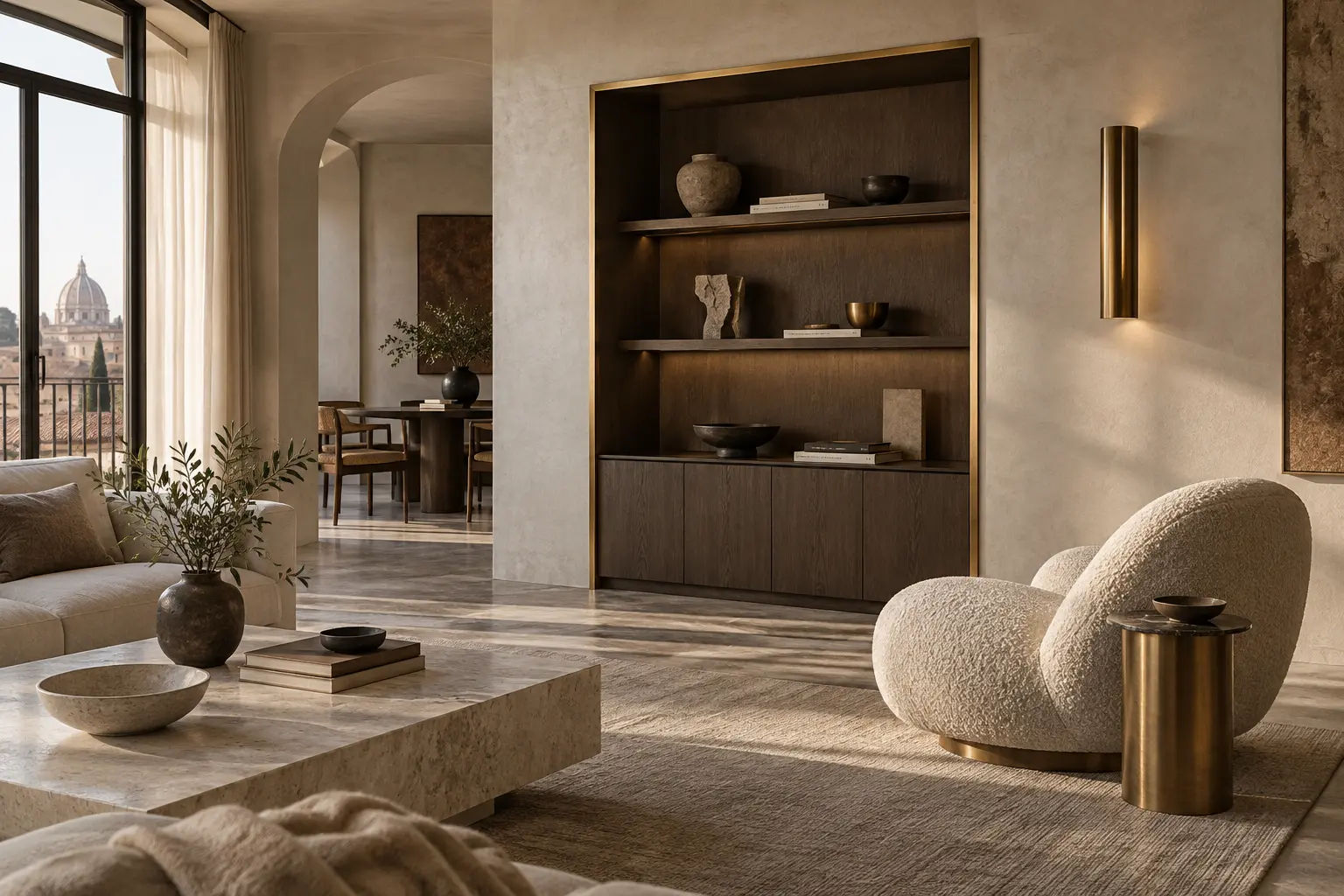
A thin edge can make a mineral wall feel deeper. A handle touched every day develops a personal patina; a small wall light gives the evening a honey-coloured glow. Burnished brass and warm metals can make a home intimate and sophisticated, but they lose their strength when repeated as a theme. The design begins with restraint: deciding where metal should catch the eye, where it should disappear and how it is expected to age.
An accent, not a decorative theme
Brass works when it establishes hierarchy. It may frame a niche, mark a cabinet base or make a handle recognisable while the rest of the room stays quiet. Repeating it on taps, lights, tables, trims and accessories with equal intensity quickly creates a contract-hotel effect. Before buying, choose two or three places that serve a real function and are seen from different viewpoints. Metal then becomes a subtle narrative thread rather than a code imposed on every object.
Solid brass, sheet, plating or PVD
Two surfaces that look similar may have very different durability and behaviour. Solid brass can be machined, refinished and sometimes allowed to patinate naturally; thin sheet needs a stable backing and resolved edges. Plating and PVD coatings can offer consistency and resistance, but they should not be described as solid brass and depend on the manufacturer’s process. Ask for composition, thickness, substrate, intended use and cleaning instructions. The right choice follows touch, humidity and frequency of use, not only the colour of a sample.
Polished, brushed or burnished changes the room
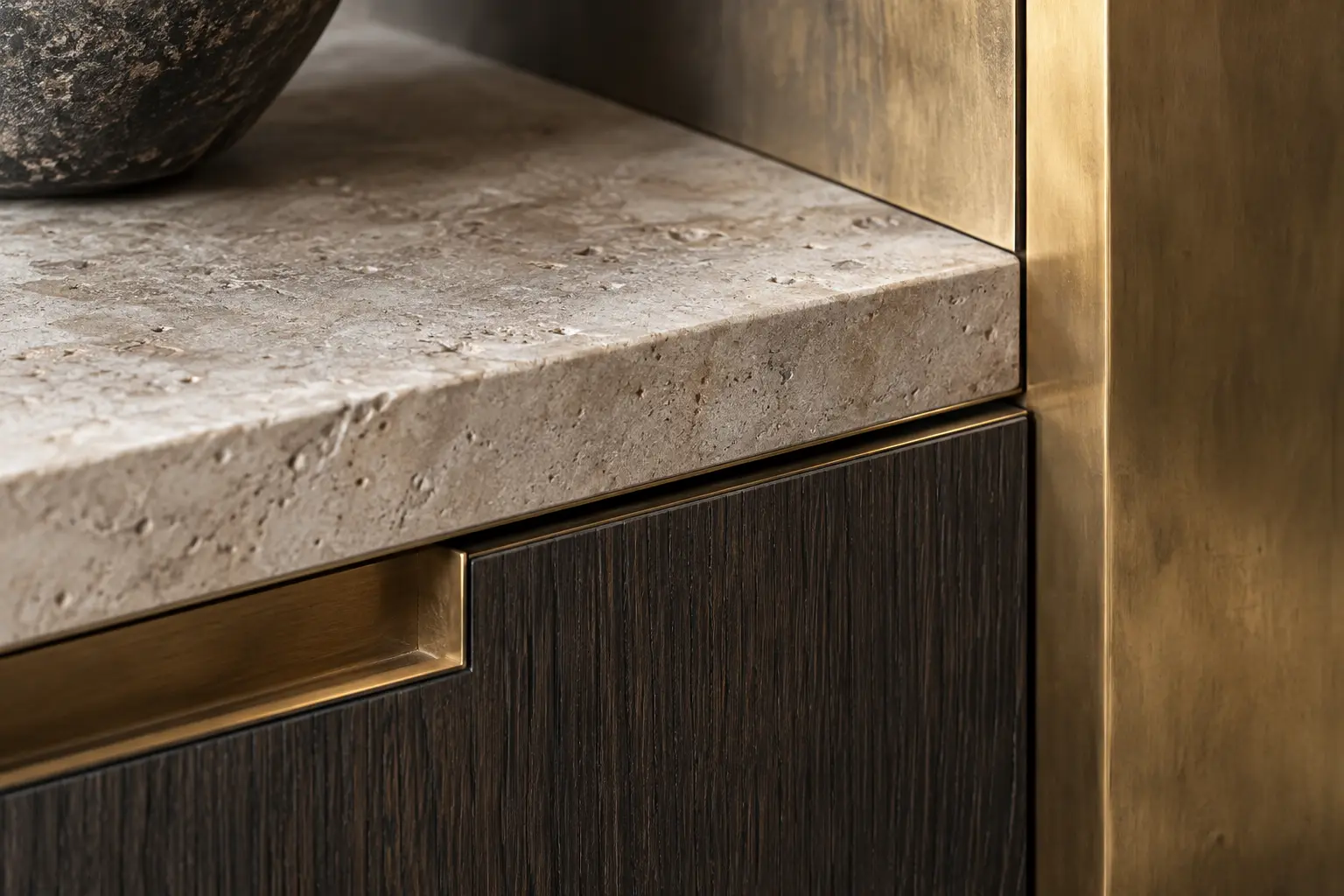
Polished brass reflects images and points of light, so it feels precious but visually prominent and prone to fingerprints. A brushed finish diffuses reflection and reveals the direction of machining; burnished brass gains depth through dark and warm variation. Industrial antique finishes may be highly consistent, while handmade ones remain more alive. No version is automatically elegant. The result depends on area, scale and light. View the sample vertically and horizontally; orientation reveals differences that a small catalogue photograph cannot communicate.
Patina is a design decision
Uncoated metal changes with air, hands, humidity and household products. Some see this as the charm of living brass; others see a defect. Decide before ordering whether to welcome evolution, protect it with a declared finish or select a more stable coating. Frequently touched areas may patinate unevenly, while high panels evolve slowly. Specifications should describe the expected appearance and maintenance rather than promise that nothing will ever change. An honest material is one whose future is understood as clearly as its first-day colour.
Pale stone, dark timber and mineral surfaces
Burnished brass grows richer beside matt, deep materials. With light travertine it brings warmth without suppressing porosity; with smoked oak or walnut it creates tonal continuity; beside lime plaster or concrete it becomes a precise point of light. Too many polished marbles and reflective metals compete for attention. Compare undertones rather than names: some brass leans green, some red. Place the real sample against the selected materials in daylight and evening light, because the apparently correct beige can completely change the relationship.
Proportion matters more than price
A profile only a few millimetres wide can feel more authoritative than an entire clad wall. Visible thickness, edge width, spacing and continuity around corners set the character. In cabinetry, an overly bright channel cuts across the front; a recessed strip creates shadow and gives the metal depth. Draw sections and end conditions, not only elevations. Corners, junctions and screws distinguish an integrated detail from something applied at the last moment to make the scheme look more luxurious.
Light decides whether it feels like honey or a mirror
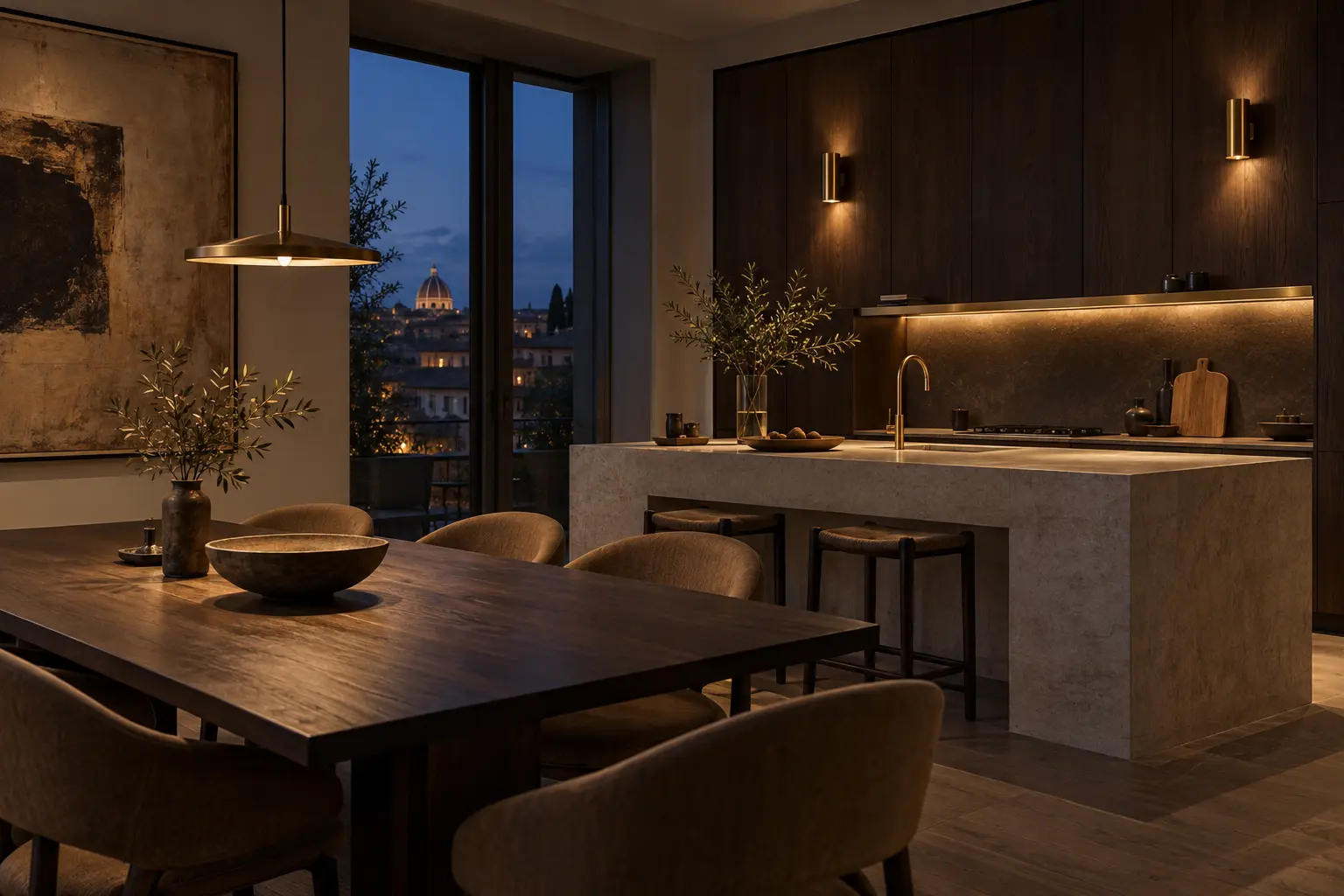
A warm, shielded source can make brass vibrate; a cold beam aimed directly at it turns the surface into a glaring mirror. Colour temperature, colour rendering, angle and distance should be tested with the sample. Metal wall lights need heat management, lamp or driver access and controlled shadows. By day, windows and neighbouring surfaces matter. Do not illuminate metal simply to prove it exists. Let it gather some of the light intended for the room and return that light with discretion.
Kitchens and bathrooms demand real compatibility
Steam, water drops, cleaners, grease and wet hands change the rules. Taps, shower profiles, splashbacks and handles must be specified for their intended use and installed to manufacturer guidance. Mixing finishes from different brands can produce distant tones even when both are called brushed brass. Near a hob, test heat and cleaning; in a shower, verify seals, limescale behaviour and compatible products. A coordinated effect comes from a matrix of samples and technical sheets, not from the same phrase appearing in three catalogues.
Junctions, edges and fixings make the detail credible
Metal expands, can mark and has tolerances unlike stone and timber. A profile set into cabinetry needs a suitable groove, adhesive or fixing and a workable installation sequence. Where it meets stone, the edge must not become fragile; across a door, it must not interfere with hinges and adjustment. Allow access, replacement and cleaning of narrow gaps. The most elegant detail does not hide the problem. It resolves it through a clear joint, controlled shadow and enough freedom for materials to move without damage.
Gentle maintenance and a mock-up before ordering
The first rule is to follow the manufacturer’s care sheet. Soft cloths and compatible products are safer than abrasive pastes or universal remedies that may remove coatings and leave halos. Test first in a hidden area. Keep the finish code, approved sample and handover photographs so future change can be understood. Before the final order, make a mock-up with the actual timber, stone, brass and lighting. If the detail remains beautiful when unlit, touched and seen close up, it truly belongs in the home.
Useful tools and accessories
Book on materials in interior design
Helps read finishes and combinations as part of the design rather than as isolated samples.
View on Amazon.itBrushed-brass cabinet handles
A small element on which to test tone, grip, edges and response to light before extending the metal.
View on Amazon.itSoft microfibre cloth
Useful for light dust and fingerprints without scratching; compatibility must be checked on the actual finish.
View on Amazon.itWarm dimmable light bulb
Lets you test how light temperature transforms metal and avoid cold, aggressive reflections.
View on Amazon.itAdvertising · Some links are Amazon affiliate links. Selection remains editorial and independent.
Explore the project
Contemporary Mediterranean style · Reeded glass and light · Carlo Scarpa: material and detail · Bespoke furniture without mistakes · Design quote
Image note: original editorial visuals generated for White Diamond to show proportion, light and material combinations.