
Reeded glass at home: light, privacy and the details that matter
It lets light through but holds the gaze back: reeded glass draws a boundary without truly closing the room.
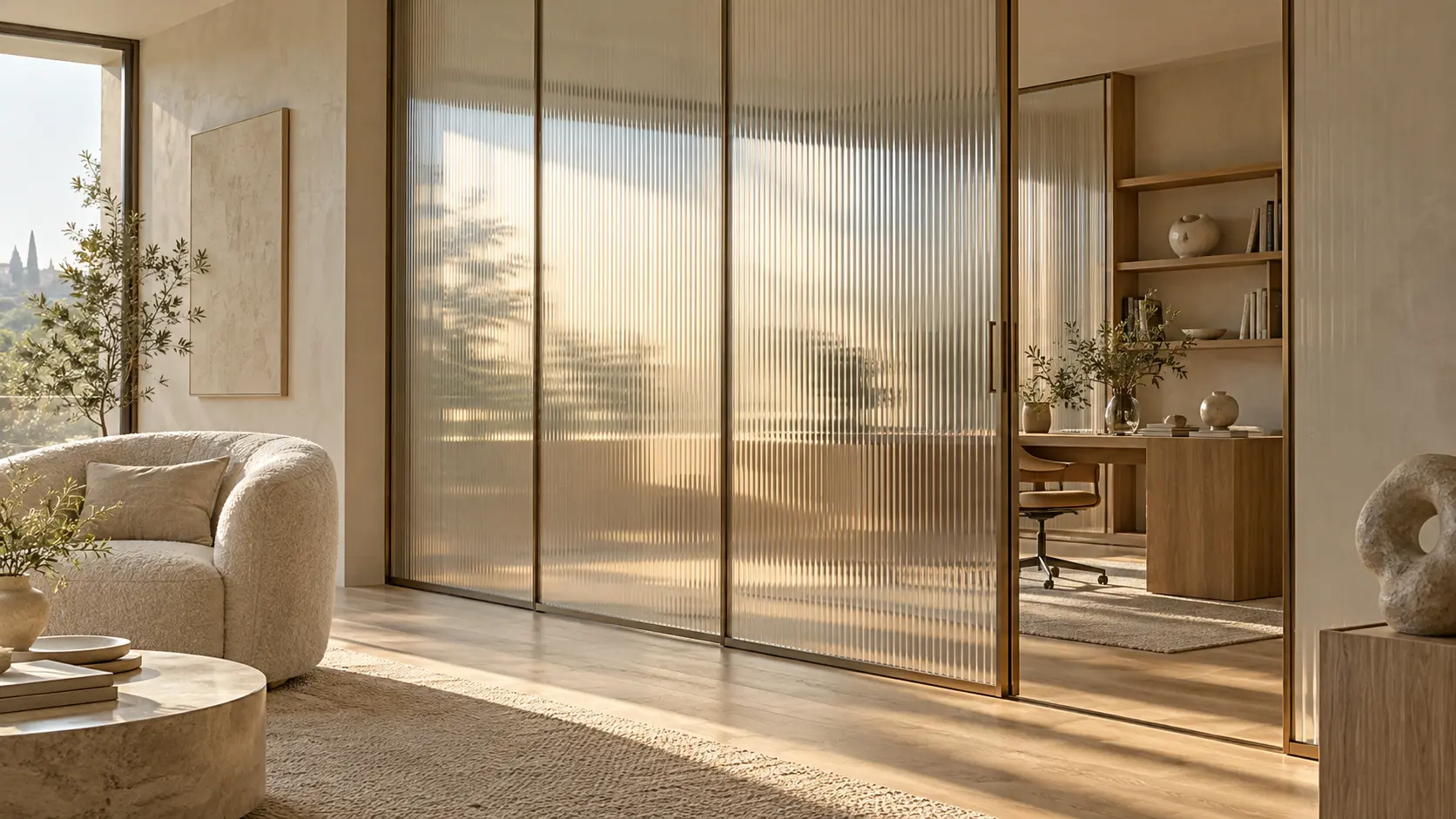
Some walls divide; others change the way a home breathes. Reeded glass belongs to the second kind: it softens what happens beyond, turns daylight into vertical vibrations and gives intimacy without an opaque wall. Its elegance, however, depends on concrete decisions—flute direction, safety, frame, handles, cleaning and the relationship with evening light.
A boundary that lets the home breathe
Reeded glass is valuable when two functions need to remain close without being fully exposed: living room and study, kitchen and entrance, bedroom and wardrobe. The fluting distorts outlines while preserving depth, so the transition feels lighter than a solid wall. First define the privacy actually required and every angle from which the panel will be seen.
Privacy does not mean invisibility
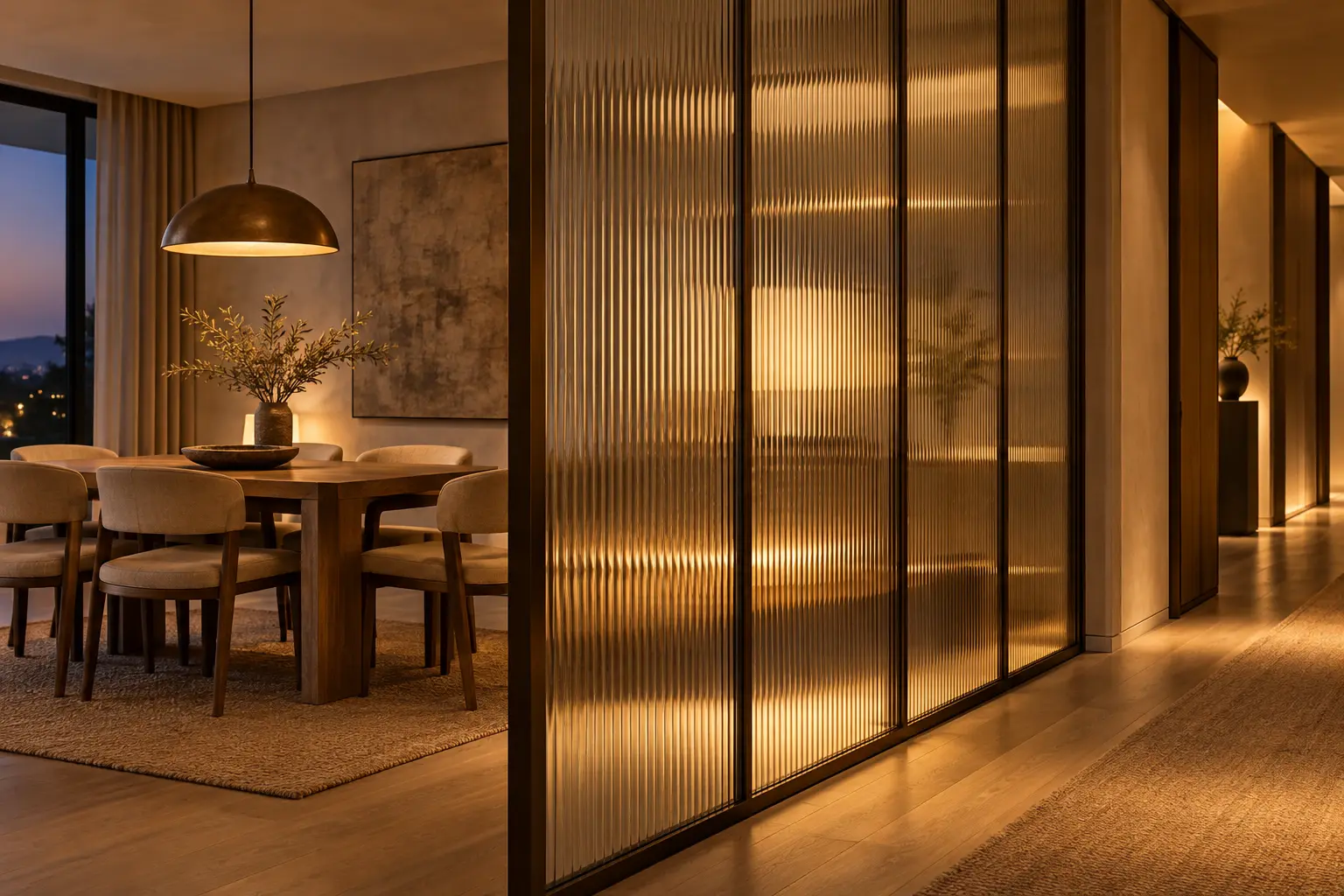
By day the relief blurs shapes and movement, but at night a lit room behind the glass can reveal recognisable silhouettes. Distance, source type and contrast between the spaces change the result. For a bathroom or bedroom, never trust a small sample alone: test the critical condition with the private side illuminated and the other room darker.
Light becomes material
The flutes collect and redirect light, producing reflections that shift through the day. Grazing light stresses the rhythm; soft frontal light calms it. Glass should therefore be chosen with the lighting plan. In front of a window it can distribute brightness; beside narrow-beam spots it may create sharp highlights and glare.
Vertical or horizontal fluting?
Vertical lines emphasise height and suit full-height doors; horizontal fluting can broaden a panel but demands carefully aligned joints. The textured face matters too: exposing it to grease, limescale or frequent hands can increase maintenance. The supplier should confirm orientation, worked face and installation method before the final survey.
Safety before appearance
A door, full-height partition or shower is not merely decoration. Thickness, toughening, lamination, panel size and hardware depend on use, position and applicable rules. Cuts and holes cannot be improvised after treatment. The design must coordinate glazier, frame maker and installer, protect edges and allow real tolerances.
The frame sets the character
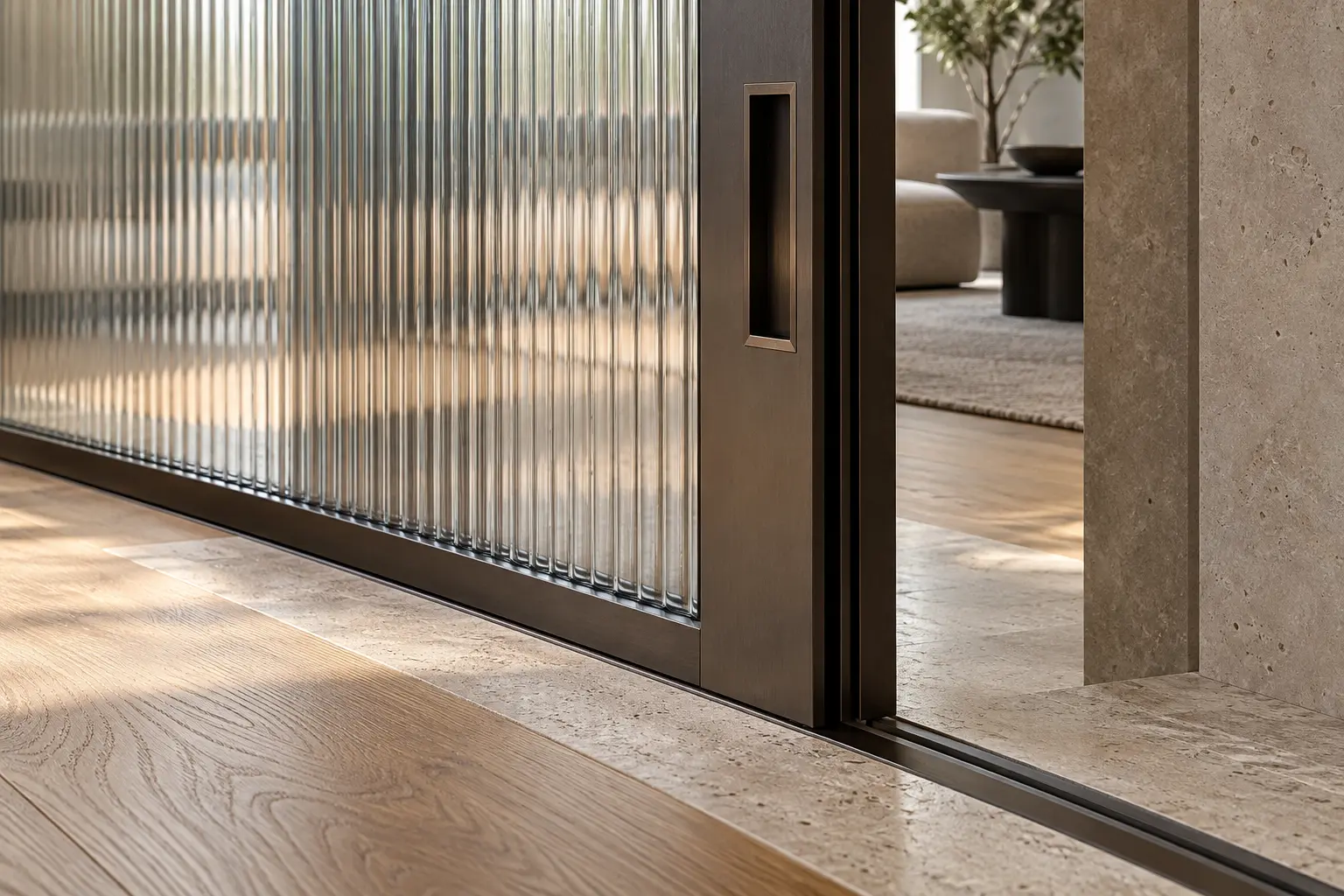
A slim bronze, black or steel profile makes the glass graphic; timber creates a softer atmosphere. Its visual weight should speak to nearby doors, skirting, handles and furniture. If every element uses a different finish, the partition loses elegance. Repeat one or two metals and draw mullions, rails and openings precisely.
Sliding, hinged or fixed
A fixed panel is visually quiet but does not provide passage. A hinged door closes clearly and can manage sound and odour more effectively when its swing is free. A sliding panel frees floor area but needs track, overlap and a handle that remains usable when the leaf retracts. Choose from daily movement, not just the photograph.
In the shower, detail matters more than effect
In a shower the relief screens the body and animates water, but limescale and soap test the surface. Where the system allows, turn the easier-to-clean face towards water. Seals, falls, opening, ventilation and cleaning access come before frame colour. A squeegee helps, but it cannot correct an installation that traps water.
Cabinet doors and small inserts
Reeded glass also works in a sideboard, wall cabinet or lit niche. At this scale, do not fill every door: alternating solid and translucent fronts creates rhythm and hides what should not remain visible. Shelves, hinges and internal light need checking because the material does not forgive random hardware or visible cables.
The decisive test before ordering
Take a real sample into the room, photograph it against daylight and evening light, then observe what it reveals at one, two and three metres. Draw the frame elevation and check tracks, handles, outlets, skirting and the floor junction. A render helps with proportion and reflection; the sample and execution detail confirm what an image cannot guarantee.
Useful tools and accessories
Reeded-effect privacy film
Useful for a reversible test on existing glass, while recognising that film cannot reproduce the depth and material quality of real reeded glass.
View on Amazon.itFluted-glass wall light
Repeats the texture at a smaller scale and reveals how light is fragmented; coordinate it with the room’s other sources.
View on Amazon.itReeded-glass table lamp
A light way to introduce the material without building a partition; check size, glare and bulb colour temperature.
View on Amazon.itCompact soft-rubber squeegee
Supports the maintenance of doors and shower panels when used with compatible cleaners and kept clear of edges and hardware.
View on Amazon.itAdvertising · Some links are Amazon affiliate links. Selection remains editorial and independent.
Explore the project
Glass partition between kitchen and living room · Doors and passages · Mirrors and reflections · Living-room lighting · Design quote