
Choose the reflection before the mirror: light and proportion at home
A mirror furnishes more than the wall behind it. It brings a second landscape into the room, and that landscape deserves a considered choice.
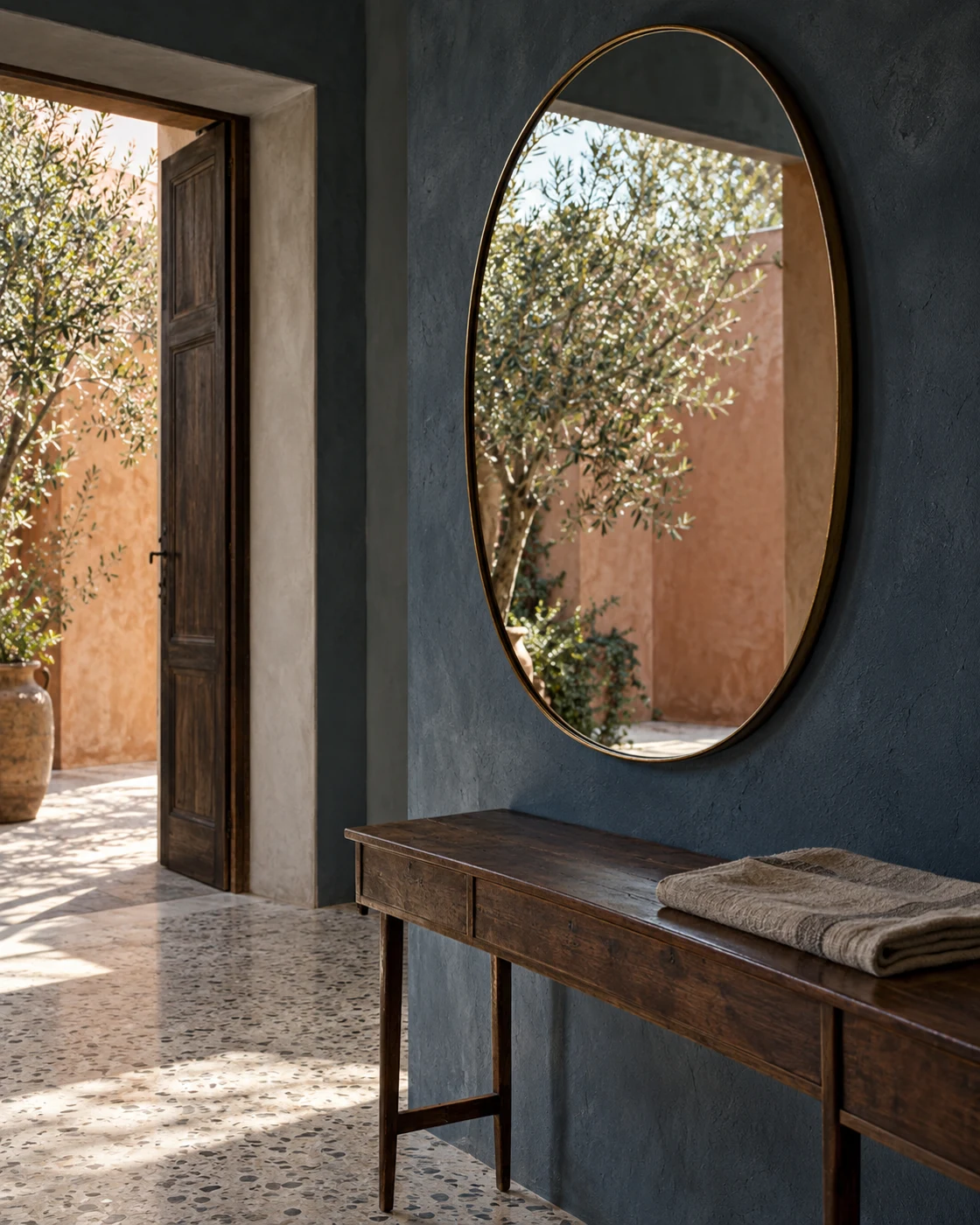
The mirror has arrived, its frame is beautiful, yet the room seems no brighter. Instead, the shoes by the door and the back of the television now appear twice. This happens when we choose a mirror like a picture, looking only at the area it occupies. A mirror has two design dimensions: the real one, made of shape and material, and the reflected one, which changes as we move. Before deciding which model to buy, establish which part of your home you want to see inside it. The quality of the result comes from that relationship rather than size or price.
Start your survey from the armchair
Look at the proposed wall from the places where you actually pause: on the sofa, at the table and beside the door. A reflection you enjoy while standing may reveal a glaring bulb once you sit down. Depending on its angle, a mirror beside a window may capture outdoor greenery or just a curtain and a patch of sky. Placing it opposite light is not enough: check what is visible, and from where.
Before drilling, ask someone to hold a small mirror in the intended position while you move between the main viewpoints. Do not improvise a hanging test with a heavy model: use a lightweight mirror to check the reflection and a paper outline to assess its footprint. Photograph the wall from your usual seat, then from the entrance. If the reflected view frames a quiet surface, a plant or an architectural detail, you already have a practical buying criterion.
Reflected light is not newly created light
A mirror returns some of the light it receives; it does not replace a window or generate illumination. In a dark corner, it may simply look like a dark surface. For a luminous presence, choose a position that catches an already bright area, while checking direct sunlight and lamp reflections. A large surface in the wrong place can increase visual discomfort rather than improve it.
Test the position in the morning and during the evening. A wall beside the window is often a useful starting point: it may bring a glimpse outdoors into view without becoming a bright rectangle facing the room. This is a possibility to test, not a universal rule. If the room has only artificial light, first illuminate a wall or an attractive object worth reflecting. The lamp should support the atmosphere without appearing as an intense source in the eyes of someone seated.
Let the shape respond to the wall
A circle gently interrupts a composition of corners and rectangular furniture. An oval suggests a longer direction; a geometric frame adds a visual mark even when the reflection is understated. On a narrow wall, a vertical object can follow the available proportions. Above a long sideboard, a small isolated mirror may look accidental: a larger size or a deliberately arranged group may work better.
There is no compulsory ratio between the width of a cabinet and its mirror. Start with edges, wall lights and sockets: leave enough space for each element to remain readable. Cut out the chosen model’s outline and temporarily attach it using a method compatible with the wall finish. A three-dimensional frame also needs a depth check, especially beside a circulation route. The centimetres projecting into the room matter as much as the ones drawn on the wall.
Three positions, three different purposes
In the living room, imagine the reflection as a second composition: an orderly bookcase, a window with greenery or a textured wall can become its subject. Avoid doubling an active television if you want a quiet atmosphere. If your main purpose is getting dressed, shift the discussion towards a full-length view: height, available distance and visibility of the body take priority over symmetry with the furniture below.
In a dining area, check the view from a chair. Reflecting the ceiling or a pendant can be interesting, unless every diner sees an overly bright source. On a small connecting wall, a group of small mirrors can work as a rhythmic decoration. Do not confuse this with a practical viewing mirror: a fragmented reflection creates a graphic effect but is less useful for checking your appearance.
Frame and material: character lives at the edge
A black frame can echo window frames, handles or a lamp base without adding another metallic tone. A copper-coloured edge warms a blue or grey wall and pairs with dark wood; the combination tends to work best when metallic finishes are few and distinct. A three-dimensional wire design needs a reasonably clear wall, otherwise shadows, reflections and surrounding objects compete for attention.
Always distinguish metallic colour from actual material: a copper finish does not mean solid copper. For bathroom use, expressly check the model’s suitability for humidity and the manufacturer’s instructions rather than inferring it from a stylish photograph. Glass, frame and fittings form one system. An elegant choice must remain appropriate for both its destination and the surface on which it will be installed.
Before ordering: wall, maintenance and budget
Check weight, fittings and instructions before purchasing. Fixings must suit the actual wall, especially plasterboard, crumbly masonry or cladding. Accessories included in the box are not automatically appropriate for your support. Also establish whether drilling could interfere with services; if you cannot determine this, have a competent person undertake the installation.
Include installation and care in your budget rather than considering only the object. An intricate frame collects dust more readily and needs greater attention. Follow the model’s cleaning instructions and avoid liquid lingering around the edges. The best value is the choice that meets the intended use with the fewest complications, not the largest possible reflective surface. The following three proposals are alternatives: there is no need to buy them together.
A final check that prevents the wrong purchase
Before confirming your order, write one sentence: this mirror will reflect this view, from this position, at this time. If your answer remains vague, postpone choosing the frame and repeat the test. Then measure the wall, the complete footprint and the clearance from open doors. A well-chosen object should not force you to change everything around it simply to make it look at home.
The most refined effect appears when the reflection feels natural: it extends an already pleasant view, supports a daily gesture and lets surrounding objects breathe. The mirror need not announce its importance. It should give the room a viewpoint that was previously missing.
Objects selected for the project
Three alternatives for three intentions: a simple circle, a sculptural frame and a decorative composition. Selection is based on their design role; check the variant, measurements and availability on the listing before buying.
Umbra Hub round mirror, black, 61 cm
The black rubber edge gives the circle a clear yet restrained presence. I would consider it for a wall needing a single focal point, with few surrounding elements and existing black details. Its design benefit is simplicity: the reflection remains central. Test the 61 cm diameter with a paper outline; this is not a full-length model. Check fixings and instructions for your intended wall.
View on Amazon.itUmbra Prisma, copper finish
The geometric metal structure gives the mirror’s edge volume. This is an alternative for a prominent decorative object above a shallow console, on a clear wall with dark woods nearby. The copper finish introduces warmth; it should not be understood as solid copper. Consider the projecting frame: in a narrow passage it may be less suitable than a simple edge. Check the selected variant’s dimensions, because the listing gives inconsistent measurements.
View on Amazon.itUmbra Dima, three diamond mirrors, black
Three elements allow a rhythmic arrangement on a wall area that does not need a large practical mirror. The diamond design adds a graphic accent and can complement simple furniture lines. Consider them a decorative alternative to Prisma rather than a necessary addition. Mock up the whole group before installation, including the gaps. Their practical limitation is the fragmented reflection: dressing or checking your face calls for a continuous surface.
View on Amazon.itAdvertisement · Product links are Amazon affiliate links. As an Amazon Associate I earn from qualifying purchases. Prices and availability may change.
Sources and further reading
Product listings and design reference consulted on 1 October 2026. Check the variant and model instructions before buying.
The right reflection starts with a considered design
White Diamond can study your wall, sightlines and room lighting before you choose a mirror. A personalised design and renders let you compare shapes, finishes and positions alongside existing furniture. Tell us which space you want to enhance, and we can develop a proposal aligned with everyday use and your budget.
Request your personalised quote