
Custom steel and wood table: proportions, structure and finishes for a stable design
A successful table does not display the strength of steel: it makes that strength quiet, leaving room for people and timber.
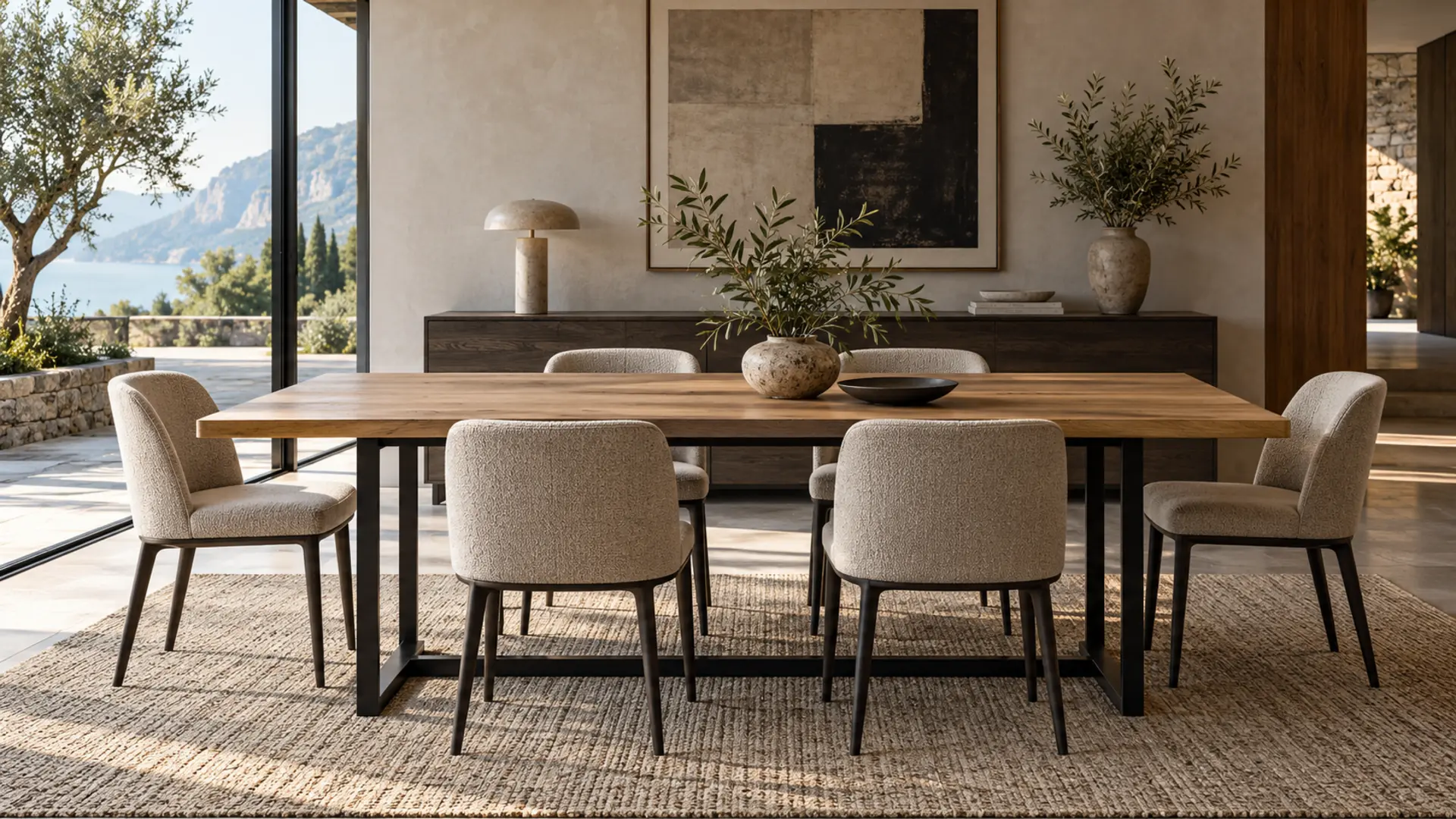
A table is a small domestic building. It carries gestures, weight and movement while looking effortless. Quality begins when top and base are designed together: proportions, sections, welds, fixings and finishes must answer one coherent drawing.
Dimensions begin with chairs, people and room
Draw chairs, circulation and gestures before choosing steel. A finished height around 74–76 cm is a common reference, not a rule: seat, top thickness and users must be tested together. Simulate pulled-out chairs, doors, sideboards and pendant position. The right table is not the largest one that fits; it lets the room keep working.
Overhangs and knee space
A recessed frame makes the top appear lighter, but excessive overhang increases deflection and leverage on fixings. Legs and rails must clear knees, end seats and armrests. Draw top, apron and chair in section, then test access from every side. Relationships matter more than one isolated dimension.
Frame geometry and lateral stability
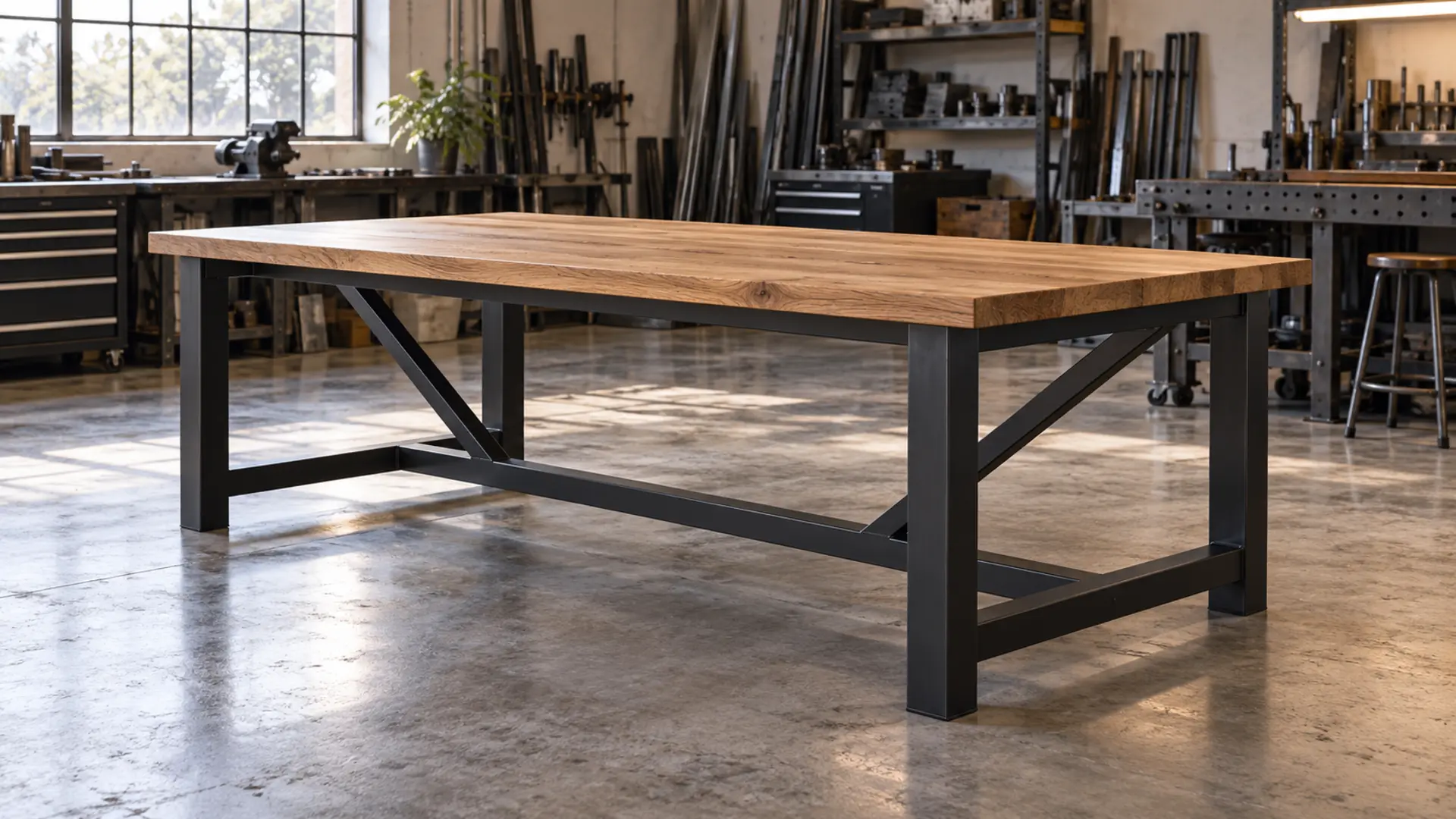
More steel is not automatically better. Section size, clear spans, frame geometry and top weight act together. Slender members may vibrate; oversized ones burden the view and delivery. Rigid joints, rails or bracing must suit the design. Large sizes and unusual loads require verification by a qualified professional.
Welds and distortion are designed
Welding heat can pull a frame out of square. Tack sequence, jigs, weld order and cooling belong to the workshop plan. Check diagonals, flatness and bearing points before finishing. Grinding every weld away is not always quality: refine what affects contact and appearance without concealing weak work.
Timber must be allowed to move
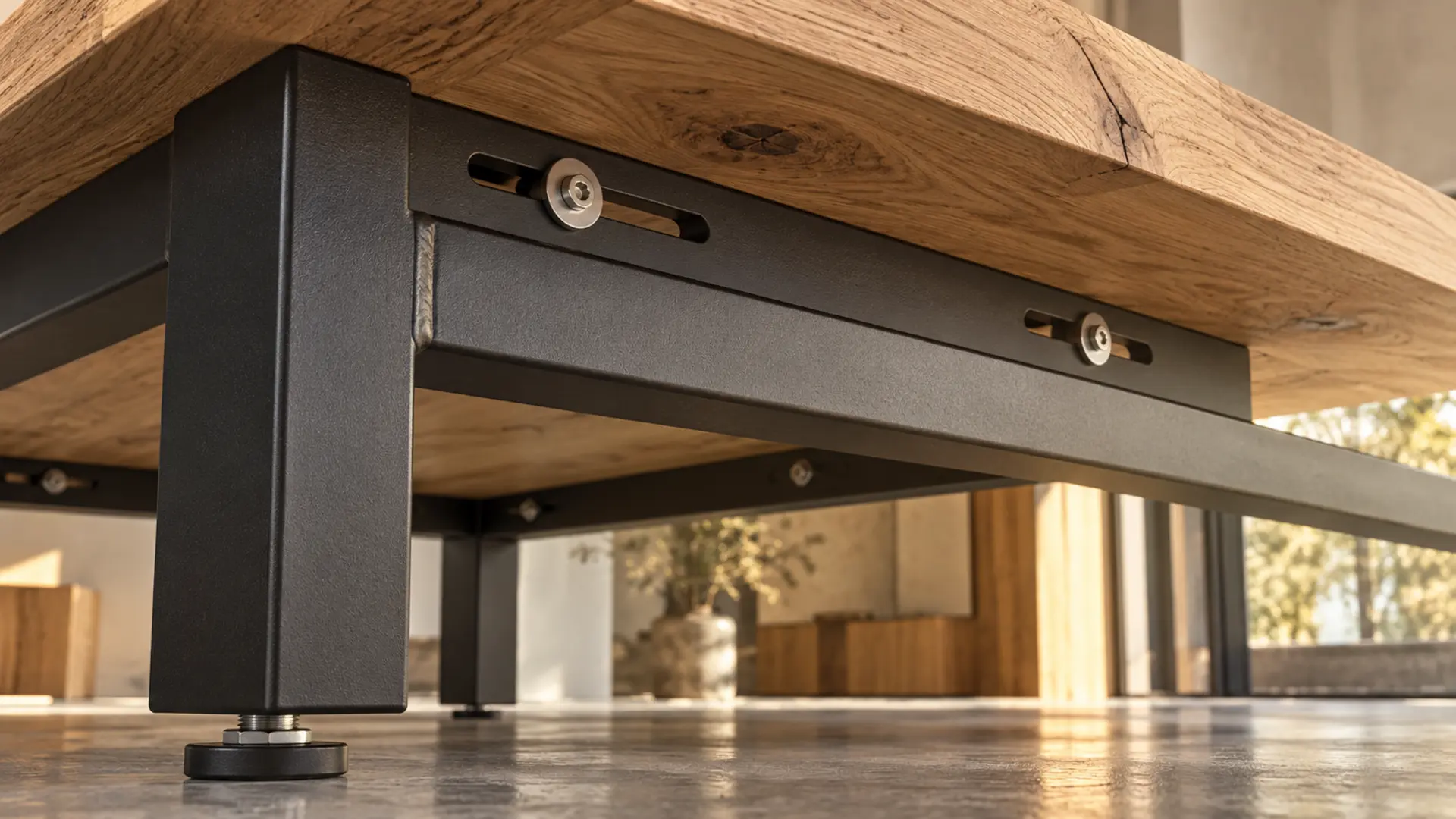
A wood top changes across the grain as humidity changes. Rigidly trapping it can encourage splits or cupping. Slotted holes, suitable clips or coordinated fasteners hold the top while allowing expected movement. Slot direction, washers, fixing count and tightening should be drawn, accessible and reversible.
Feet, floors and quiet use
A level workshop frame can meet an uneven floor. Discreet adjustable feet help level the table and protect parquet, stone or resin. Specify load capacity, thread and replaceable pads. Stability also means no tapping or vibration during everyday use.
Choose the steel finish for the setting
Powder coating, liquid paint, blackening and clear protection differ in appearance, repair and limits. For dining rooms, evenness, impact resistance and cleaning matter; damp or outdoor locations need a dedicated system. Approve colour and sheen beside the timber under final light.
Timber edge, touch and care
Species, build-up, apparent thickness and edge define the table’s presence. A bevel lightens the volume; a square edge reads as mass. Oil, lacquer and wax need different care. The specification should name the finish, compatible products and a repair route rather than promise indestructibility.
Delivery and assembly are part of design
Measure doors, lifts, stairs and turns before fabrication. Where necessary, separate top and base with precise mechanical joints. Document hardware and assembly order. After installation, check fasteners, level and every foot, and retain photos and product codes.
A readable quotation checklist
List finished dimensions, timber and finish, steel sections and geometry, weld finish, protective system, feet, removable fixings, transport and assembly. Include plan, elevations, sections and a timber-to-steel detail. Separate materials, fabrication, finishing and installation so durability can be judged, not just the image.
Useful tools and accessories
Piedini regolabili per mobili
Aiutano a compensare piccoli dislivelli e a proteggere il pavimento; portata e filettatura devono essere coerenti con la struttura.
View on Amazon.itIgrometro per legno
Utile per controllare l’umidità indicativa del piano prima della lavorazione e della consegna.
View on Amazon.itSquadra digitale
Aiuta nei controlli preliminari di angoli e planarità; non sostituisce dime, banco e verifiche di officina.
View on Amazon.itOlio o cera per mobili in legno
La manutenzione va scelta in base al ciclo applicato dal falegname e provata in una zona nascosta.
View on Amazon.itFeltrini ad alta densità
Una protezione sostituibile limita segni e rumore, soprattutto quando il tavolo viene spostato.
View on Amazon.itAdvertising · Some links are Amazon affiliate links. Selection remains editorial and independent.
Explore the project
Interior design services · Design quote · Dining-table dimensions · Steel and timber stair · Workshop drawings