
Carlo Scarpa at home: material, light and details for deeper living
You do not need to copy a master: you need to understand what he teaches about light, material and everyday passages.
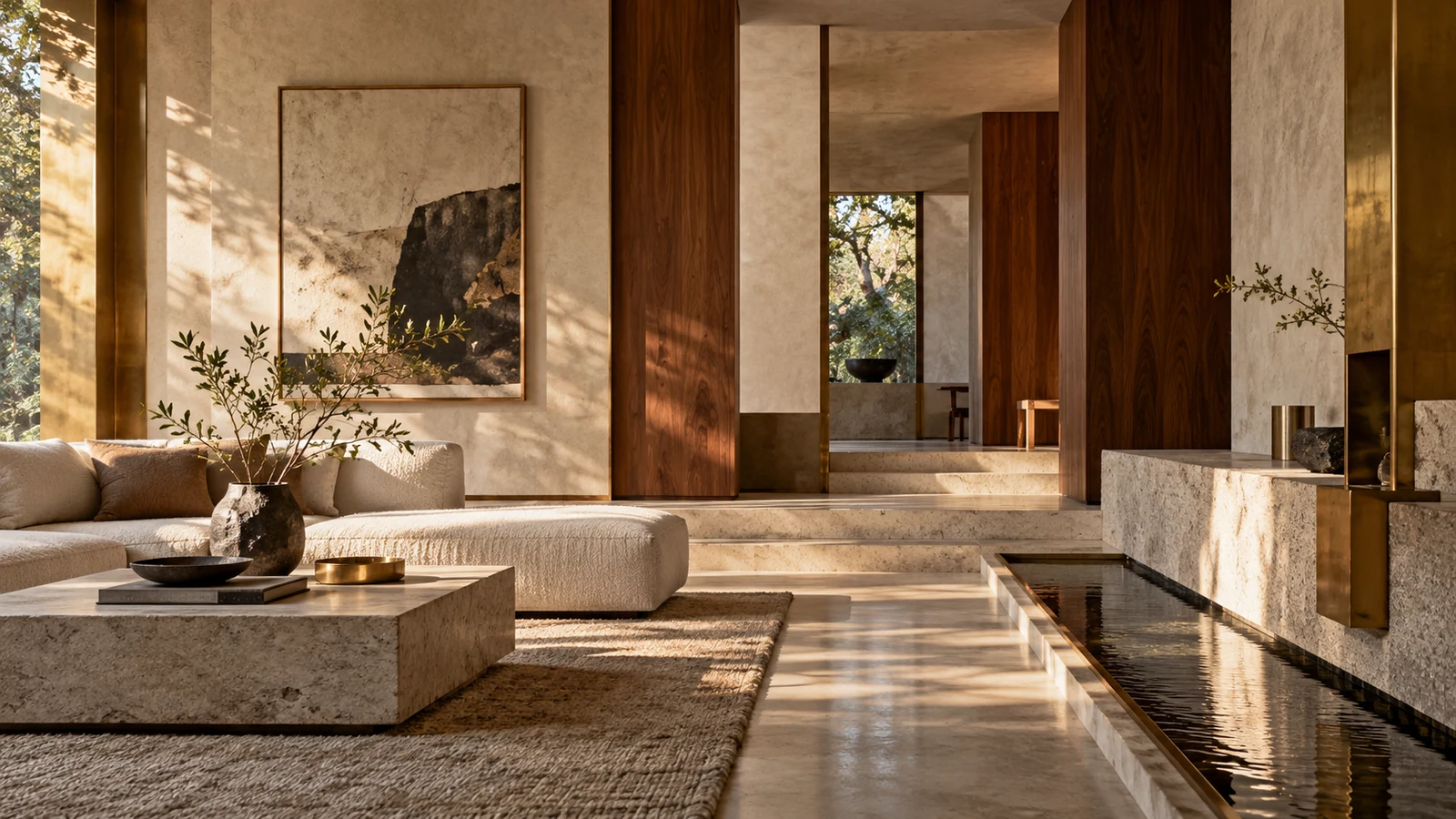
Some homes are correct; others stay in memory. The difference is often not cost, but the way a threshold catches light, an edge changes material, artwork finds silence and a handle becomes a gesture. Looking at Carlo Scarpa from a contemporary home means learning intensity without display.
Translate, do not imitate
The risk with a great architect is turning the home into scenery. Scarpa should not be copied through random niches, brass and stone. Translate the method: read the entrance, control light, let materials meet respectfully and give weight to small passages. A contemporary home can learn from him without becoming a museum.
A threshold is a moment, not a line
A door, step or passage between rooms can be more than separation. A slight change of level, material or light tells the body that another moment is beginning. A good threshold does not interrupt; it prepares. It must work with flooring, walls, skirting, light and nearby furniture.
Real material, used with restraint
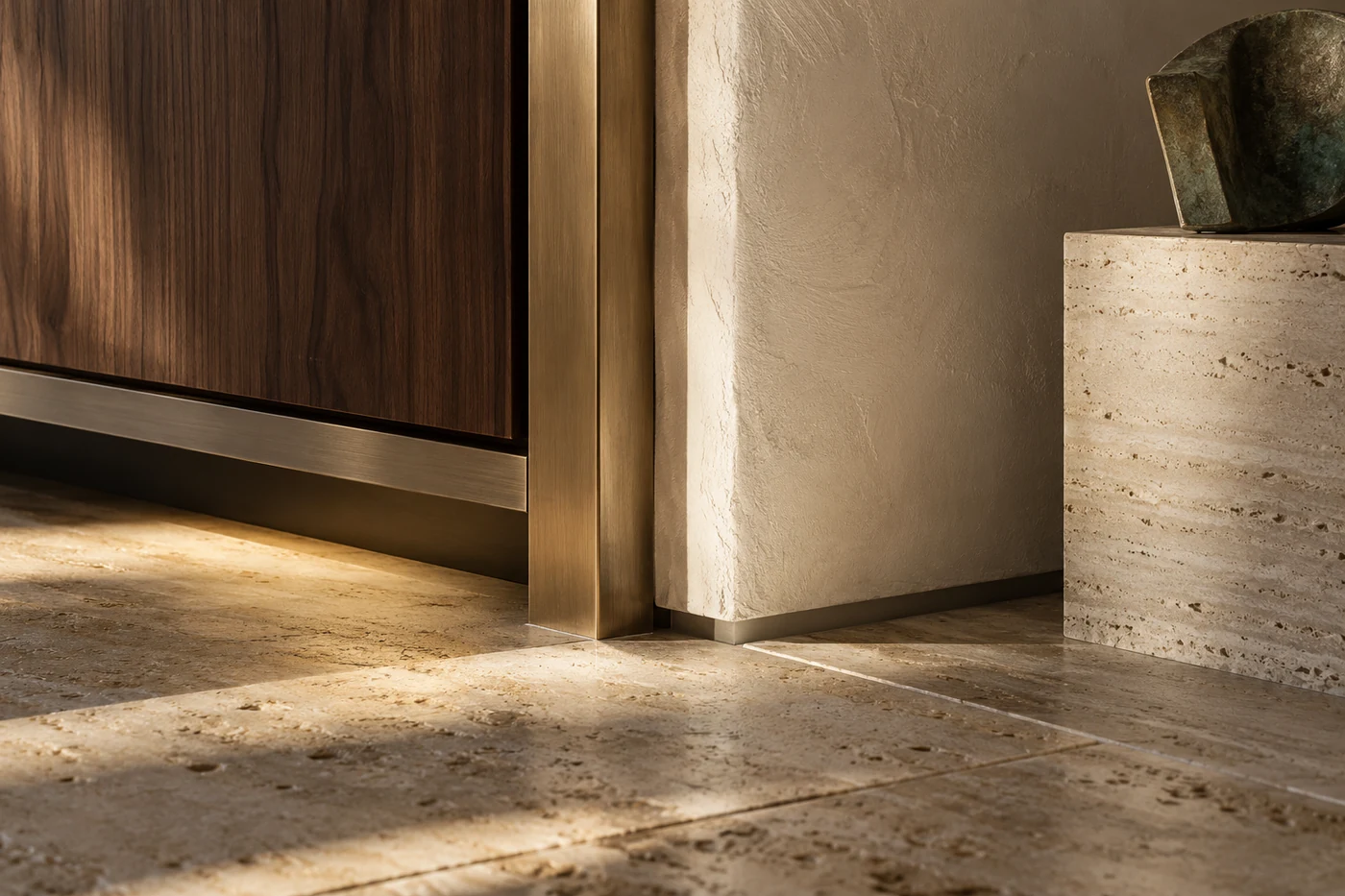
Stone, timber, metal and plaster work when they do not pretend. A slab, brass trim, timber panel or textured wall needs a reason: protect, reflect, contain, hold art or mark an edge. Luxury comes from the precise relationship between a few well chosen materials.
The junction reveals quality
Where two materials meet, the home shows how much it was designed. A casual edge becomes noise; a drawn junction becomes rhythm. Joint, profile, shadow gap, setback or small separation can solve thickness and visual clarity. Before choosing the material, know how it ends.
Grazing light gives surfaces a voice
A textured wall lit frontally loses depth; grazing light reveals grain, imperfection and vibration. You do not need many spotlights. Decide which surfaces deserve attention and which should stay quiet. Good light does not illuminate everything; it builds hierarchy and direction.
Art at home is not just hanging
A painting, photograph or small sculpture needs air. Height, distance from furniture, wall colour and light type change the reading of the work. In a design-aware home, art is not filler: it is an emotional gathering point. One considered wall is better than many unrelated pieces.
Niches, shelves and plinths as tools
A niche should not be a decorative hole. It can hold a vase, protect a light, add depth to a corridor or order small objects. Shelves and plinths work when proportion, thickness and shadow are right. If they do not build space, they become dust and complication.
Metal details without jewellery effect
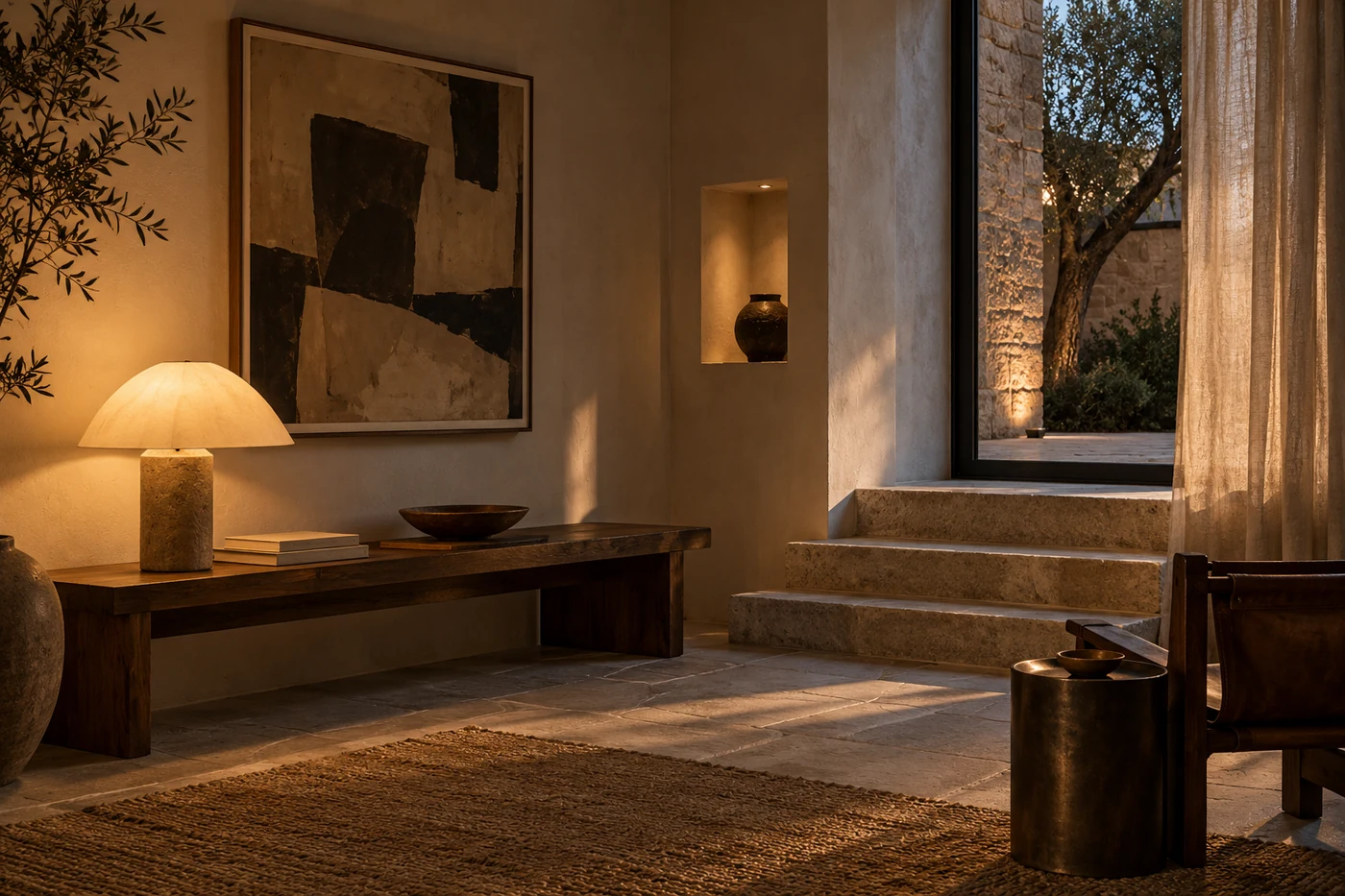
Brass, bronze, dark iron and steel can add warmth or precision, but they need restraint. A profile that is too shiny or repeated everywhere weakens the whole. Better a few points: a threshold, an edge, a handle, a small frame. Metal should connect, not shout.
How to bring it into a normal home
Start with an entrance, TV wall, reading corner, corridor or passage to the terrace. You do not need to redo everything. Find one point where material, light and gesture can work together. A render or moodboard clarifies whether the detail adds emotion or only complicates the room.
Pre-design checklist
Choose one point, define the gesture it should support, photograph the light at three moments, collect real samples, check thickness, cleaning, maintenance, installation and cost. Draw the junction before confirming material. If the detail does not improve use, light or emotion, remove it.
Useful tools and accessories
Book on Carlo Scarpa and architectural detail
A useful way to study how material, light, junction and route can become design language inside a home.
View on Amazon.itStone or travertine table lamp
Brings low, material light to a console, niche or bedside corner without turning the room into a cold stage set.
View on Amazon.itBrushed brass trim profile
Worth considering for edges, thresholds or small inserts when designed with restraint rather than used as random decoration.
View on Amazon.itNatural stone or travertine samples
Before choosing floors, thresholds or tops, real samples should be seen in the room light and beside other materials.
View on Amazon.itSlim frame for art prints
A restrained frame helps artwork speak to wall, light and furniture without becoming visually noisy.
View on Amazon.itAdvertising · Some links are Amazon affiliate links. Selection remains editorial and independent.
Explore the project
Materials at home · Art at home · Domestic thresholds · Living-room lighting · Design quote