
Charlotte Perriand at home: designing freedom, comfort and everyday life
A home is not a showcase: it is a landscape of gestures, bodies, objects and relationships that need room.
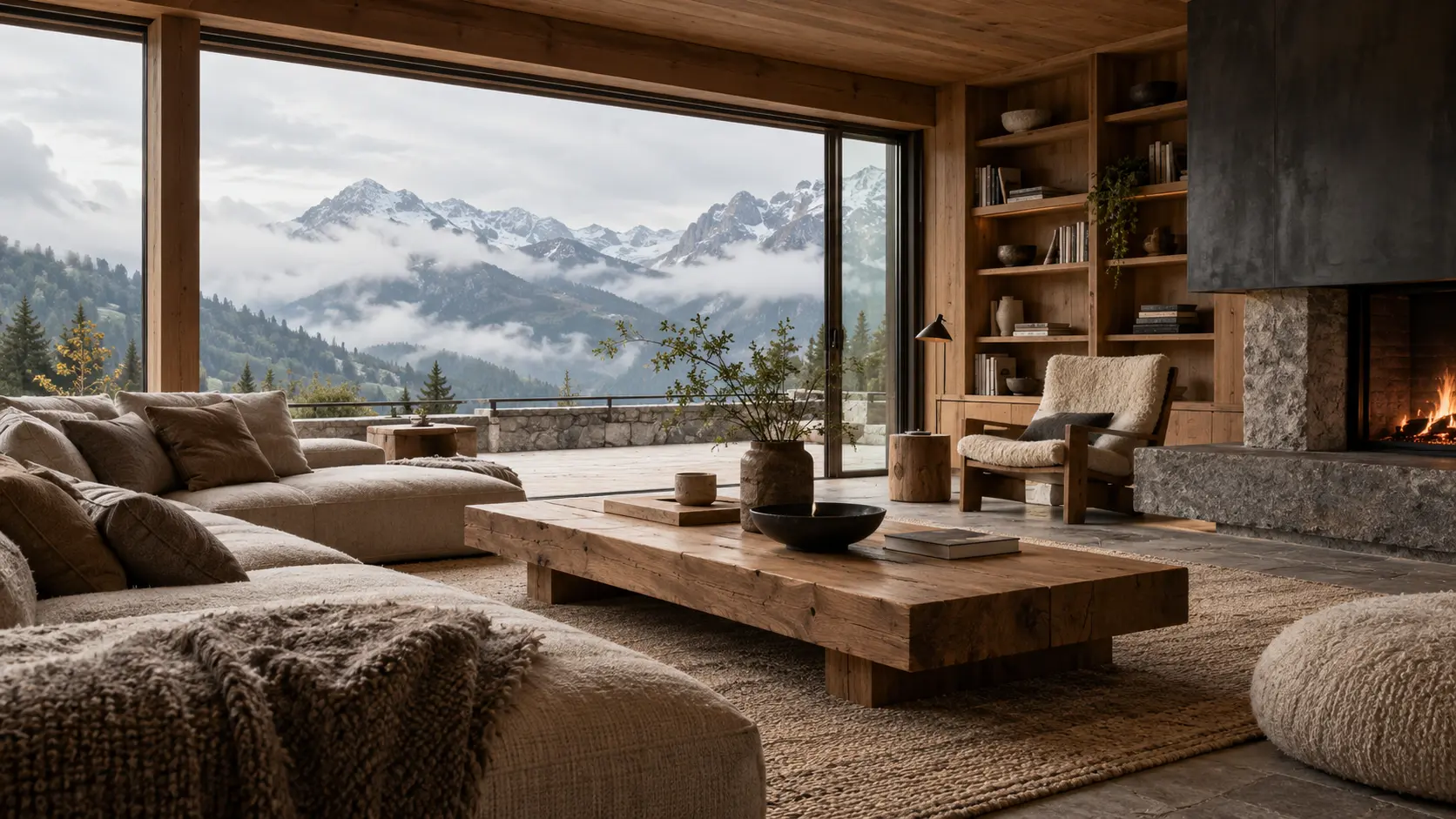
Charlotte Perriand reminds us that the best design does not ask to be admired from a distance. It asks to be used: sitting, opening, placing, working, eating together and looking outside. Bringing that lesson home today means freeing movement, choosing honest materials and building comfort without filling every wall.
Design begins with the body, not the photograph
A room can look impeccable and remain uncomfortable. Perriand’s most current lesson is to observe the body: how we enter, where a bag lands, how far a chair moves back and which height truly invites sitting. Posture, distance, grip and movement come before style. Beauty begins when the gesture no longer needs permission from the room.
Freedom does not mean an empty room
A free space is not without furniture; it is without unnecessary obstacles. Sofa, table, bench and storage should create legible routes and leave room for changing use. In a small living room, a few well-proportioned pieces outperform a complete but rigid composition. Test the plan with doors open, chairs pulled back and people moving.
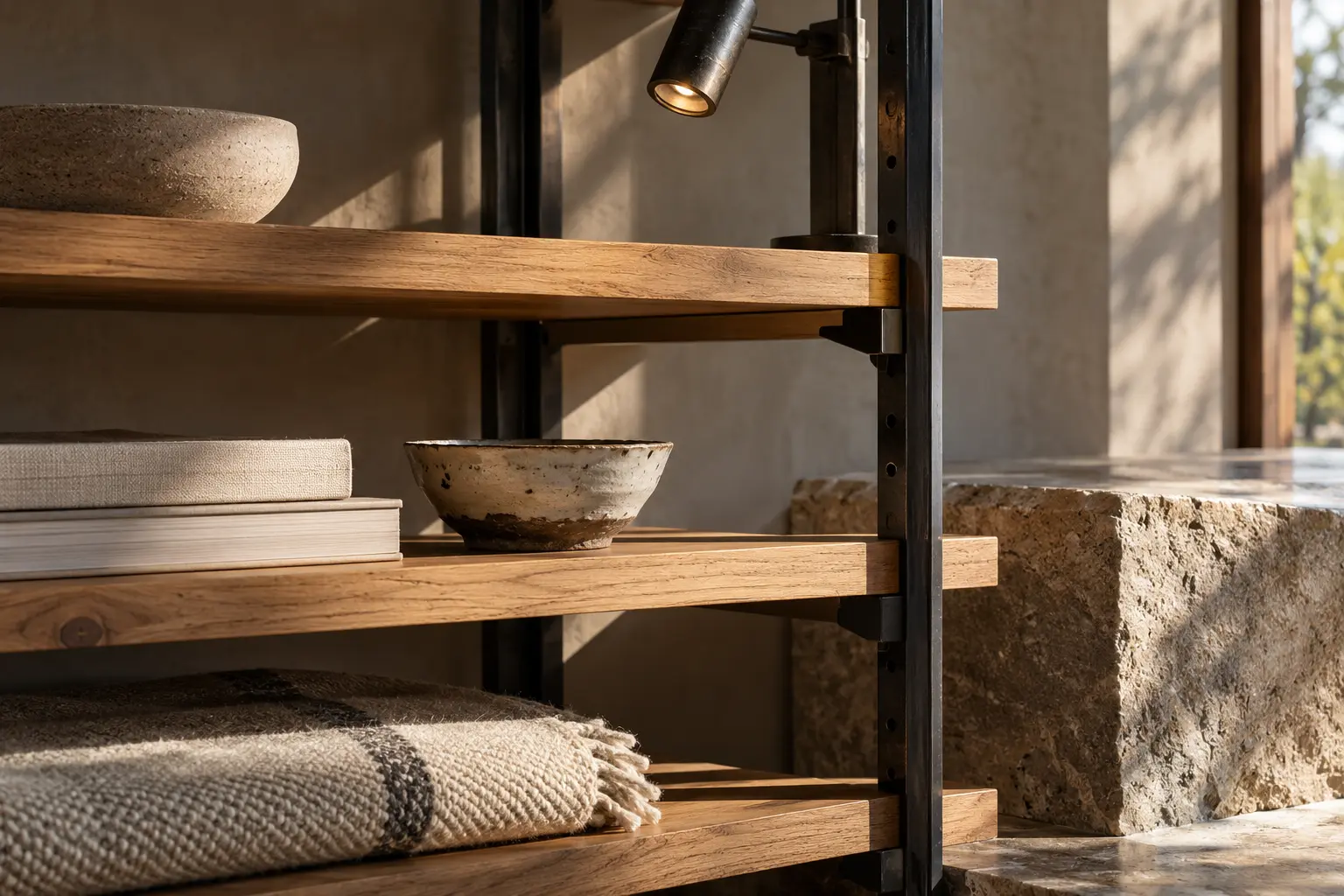
Integrated furniture gives space back to life
A window bench, bookcase with a work surface or low cabinet that becomes a ledge can perform several roles without multiplying volumes. Integration works only when maintenance, services and openings remain accessible. Bespoke furniture should not freeze the home; it should remove noise and return floor area to daily gestures.
Timber and steel, without hierarchy
The warmth of timber and the precision of steel are not opposites. They can collaborate through a slender structure, tactile surfaces, protected edges and readable junctions. Quality appears in sections, thicknesses and the way material accepts time. An honest, repairable and well-detailed surface becomes part of domestic memory.
Store horizontally to preserve air
Low cabinets, benches and continuous shelves keep upper walls open and broaden the sense of space. It is not a universal rule: capacity must be measured. List objects, books, toys and devices before drawing the volume. Effective storage hides visual noise while keeping the objects that give a room identity close and visible.
The table as social infrastructure
A table is not simply a product. It is where work, meals, homework and conversation overlap. Shape, height, edge, leg position, light and outlets determine how many lives it can support. A tray, adjustable lamp and nearby storage let activities change without emptying the whole room. Conviviality also depends on logistics.
Comfort: less padding, better relationships
Comfort is not only softness. Depth, back angle, foot support, proximity to a surface and the option to face another person or the landscape all matter. Essential benches can welcome with correctly sized cushions; generous sofas can fail when they block circulation. The body should be able to choose more than one posture.

The window is orientation, not backdrop
In mountain projects, landscape helped Perriand connect interior life with the horizon. Even without a spectacular view, choose what to frame: a tree, sky, courtyard or morning light. Seats and tables need not always face a screen. A room gains depth when it offers a point from which the gaze can travel.
A light for each gesture, not one for the room
General light, table lamp, reading source and low evening glow should work separately. This reduces waste and changes atmosphere without changing furniture. Controls, outlets and drivers need coordination before cabinetry; colour temperature, glare and material rendering should be tested in place. Light is function, not final effect.
Translate Perriand into an ordinary home
You do not need iconic replicas. Choose one gesture that creates friction today: a permanently cluttered table, an entrance without a landing place, a rigid living room or work invading dinner. Design one solution that can change state, measure bodies and routes, select two or three coherent materials and verify it with a plan or render. The lesson is not owning design; it is living better through design.
Useful tools and accessories
Book on Charlotte Perriand
A way to understand the relationship between body, space, mountains, work and everyday life without reducing her thinking to one icon.
View on Amazon.itAdjustable wall light
Places light where it is needed and frees the surface beside a bench, bed or compact workstation.
View on Amazon.itTimber storage bench
Combines seating and order without adding a separate piece for every function; dimensions and opening need real-space checks.
View on Amazon.itWool or bouclé cushion
Adds tactile comfort to essential benches and seats; choose a few durable, removable covers within the room palette.
View on Amazon.itTimber tray for the table
Gathers everyday objects so a table can move quickly from work to dining or conversation.
View on Amazon.itAdvertising · Some links are Amazon affiliate links. Selection remains editorial and independent.
Explore the project
Eileen Gray and intimacy · Luis Barragán and the garden · Materials in harmony · The dining table · Design quote