
Alvar Aalto at home: bent wood, light and human-scale comfort
The hardest luxury to design is not a rare object: it is a room that welcomes the body without demanding attention.
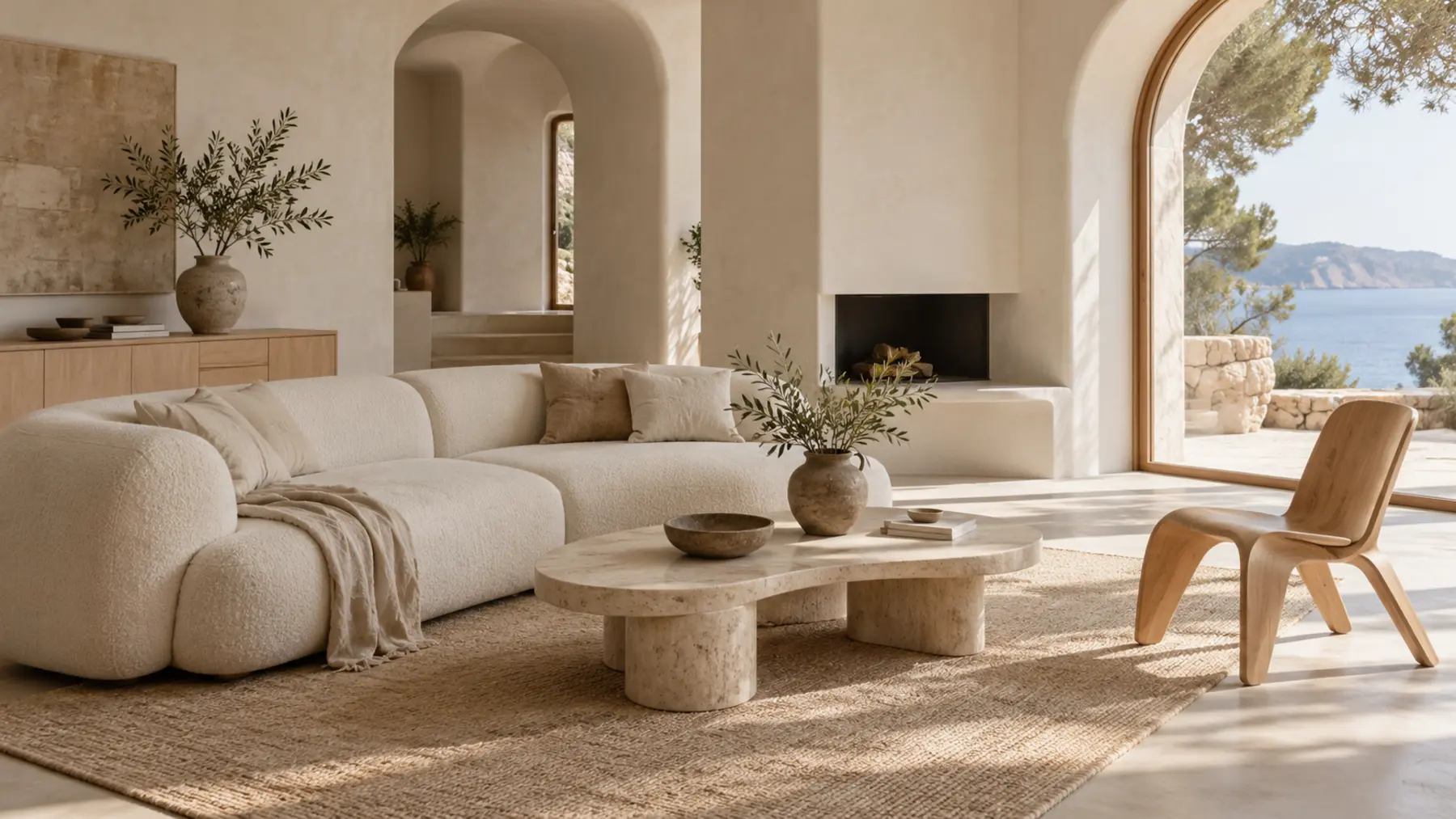
Alvar Aalto’s lesson enters the home when we stop collecting quotations and start designing relationships: hand and timber, light and surface, seat and posture, quiet and conversation. His work suggests a less rigid modernism, where technique serves a more human way of living.
Original editorial images: they interpret design principles and do not depict Alvar Aalto works, interiors or furniture.
Do not copy the icon: understand the method
Bringing Aalto into a contemporary home does not mean filling it with recognisable replicas. Begin with experience: tactile surfaces, gentler edges, natural routes and light without glare. A reference becomes useful when it guides a real decision. Before buying an object, ask which gesture it improves, which relationship it creates and how it will age beside other materials.
Bent wood is technique before form
Stool 60, designed in 1933, made a solid-timber bending system based on the L-leg widely known. The Alvar Aalto Foundation describes cuts made into the end of the blank, filled with thin glued pieces before bending. Its value is not the curve as decoration but the way one technical detail can generate a coherent family. At home, apply the principle through a few well-resolved repeated joints instead of many unrelated shapes.
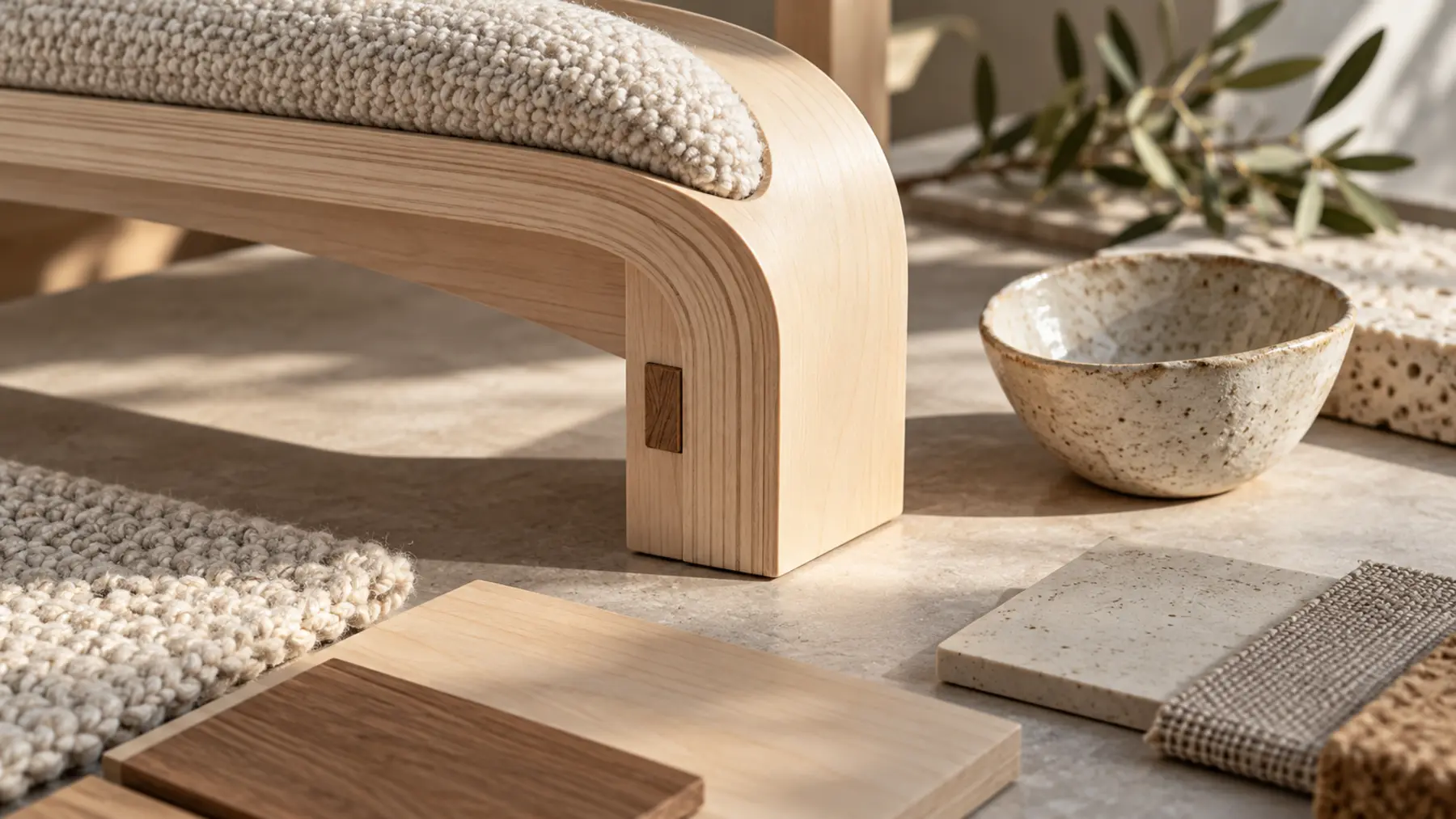
Birch, oak or ash: choose character, not a label
Pale birch brings quiet light, oak a stronger grain and ash a more graphic rhythm. No species is automatically Nordic or correct. View large samples vertically and horizontally, morning and evening; compare veneer with solid timber, edge with face, matt lacquer with oil. Continuity comes from controlling tone, reflection and junction rather than from the timber name.
A curve should protect the gesture
A rounded edge can follow the hand, soften a narrow route and visually lighten a bench. If it reduces support, complicates cleaning or forces a weak structure, it becomes mannerism. Define radii in relation to thickness and use, then test the profile at full scale with a template. Perceived softness comes from precise proportions, not an arbitrary organic shape.
Diffuse light needs points of intensity
A completely even room feels flat. Build a soft background with indirect or shielded light, then add sources close to reading, table, shelving and evening circulation. Separate circuits, check glare from seated positions and test materials before fixing colour temperature. Warm timber under overly yellow light loses depth; cool light can make textiles and plaster feel hostile.
Comfort is acoustic too
Timber, wool, curtains and irregular surfaces do not replace acoustic design, but they can interrupt domestic reverberation better than an entirely hard room. Distribute textiles and volumes around conversation instead of concentrating everything on one wall. Listen after each change: the aim is not absolute silence but speaking and reading without raising voice or volume.
Asymmetry is not disorder
A composition can balance without mirroring. An off-centre lamp, a seat turned towards the window and shelving that alternates solids and voids create movement when hierarchy remains clear. Choose one main axis, one dominant material and one pause. Then verify doors, drawers and people can move: good asymmetry still reads when the room is lived in.
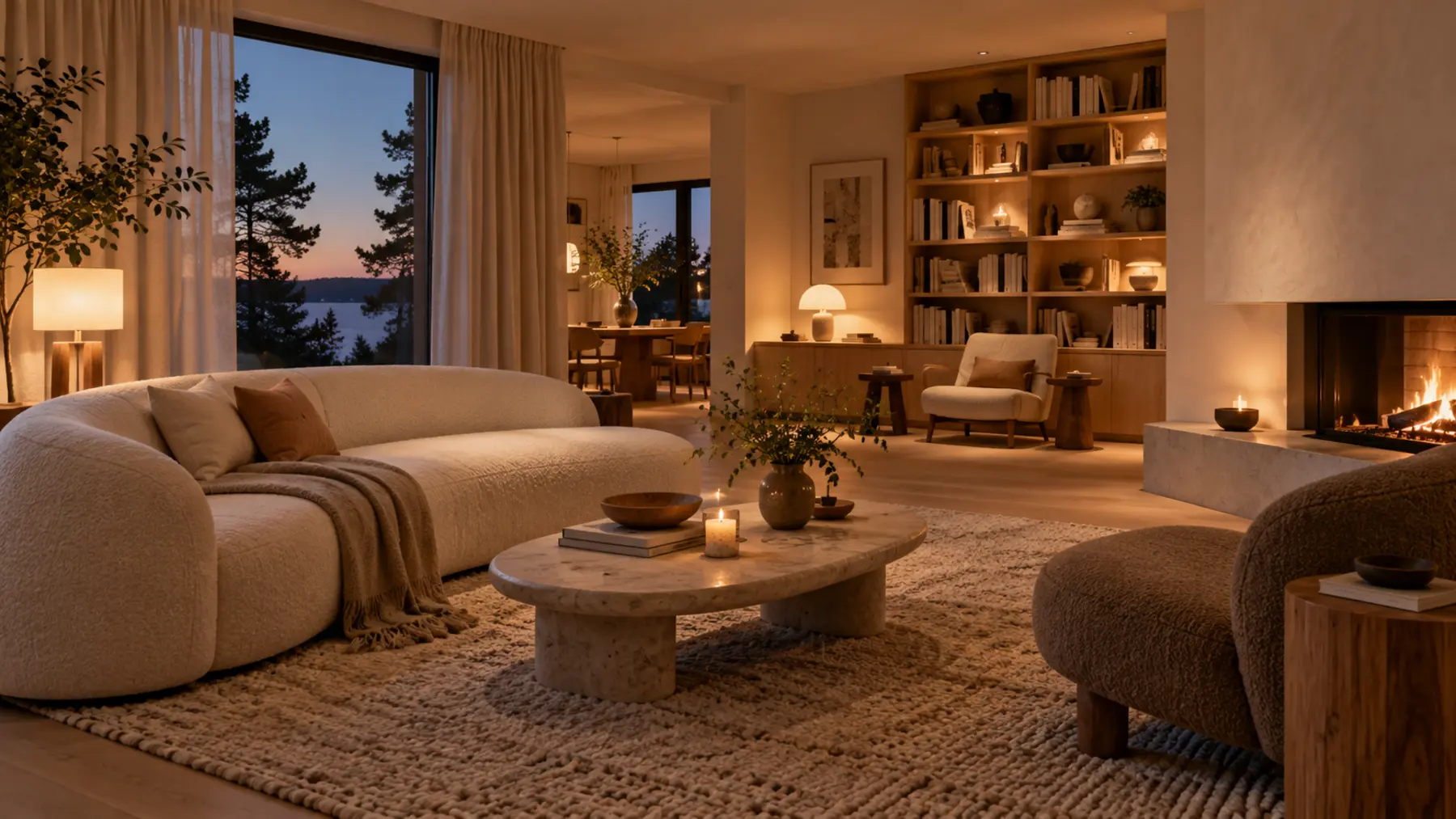
Design from the body’s position
Posture comes before the photogenic plan. Mark feet and back, the space needed to stand, hand reach and sightline. A beautiful armchair fails without a nearby surface; a light table may work better if one hand can move it. Test distances with tape and cardboard, then transfer them into drawing and render.
A short palette that changes through the day
Limit the base to timber, pale plaster and one tactile textile; introduce a deep tone in a few places for depth. Photograph samples during the hours you will inhabit the room rather than building the palette only on screen. Colour should not freeze the space: it can reflect in the morning, gather warmth at sunset and let pools of light emerge at night.
Translate Aalto without turning home into a museum
Choose one real problem: harsh light, rigid circulation, an isolated seat, reverberation or cold materials. Solve it with a system rather than a quotation: a continuous edge, shielded light, an original curved bench, an acoustic curtain or a coherent sequence of timber. Draw clearances, sample materials and verify maintenance and budget. The most faithful lesson is a home that feels natural to use.
Sources and further reading
Institutional references consulted for the history of the design and timber process: Alvar Aalto Foundation — Stool 60 · Artek — L-leg Collection.
Useful tools and accessories
Book on Alvar Aalto
A way to explore architecture, furniture and the relationship between technique, nature and daily life beyond one icon.
View on Amazon.itDimmable table lamp
A shielded adjustable source creates a reading island without flattening the whole room.
View on Amazon.itNatural wool throw
Adds tactile comfort and introduces a warm, durable material into the palette.
View on Amazon.itBirch veneer samples
Useful for comparing grain, tone and finish under the room’s real light before specifying joinery.
View on Amazon.itAdvertising · Some links are Amazon affiliate links. Selection remains editorial and independent.
Explore the project
Charlotte Perriand and everyday life · Eileen Gray and intimacy · Carlo Scarpa: material and detail · Lighting the living room · Design quote