
A sensory garden: designing scent, sound and shade for slower living
The rarest outdoor luxury is not adding more: it is noticing time change through scent, shade and the quiet sound of footsteps.
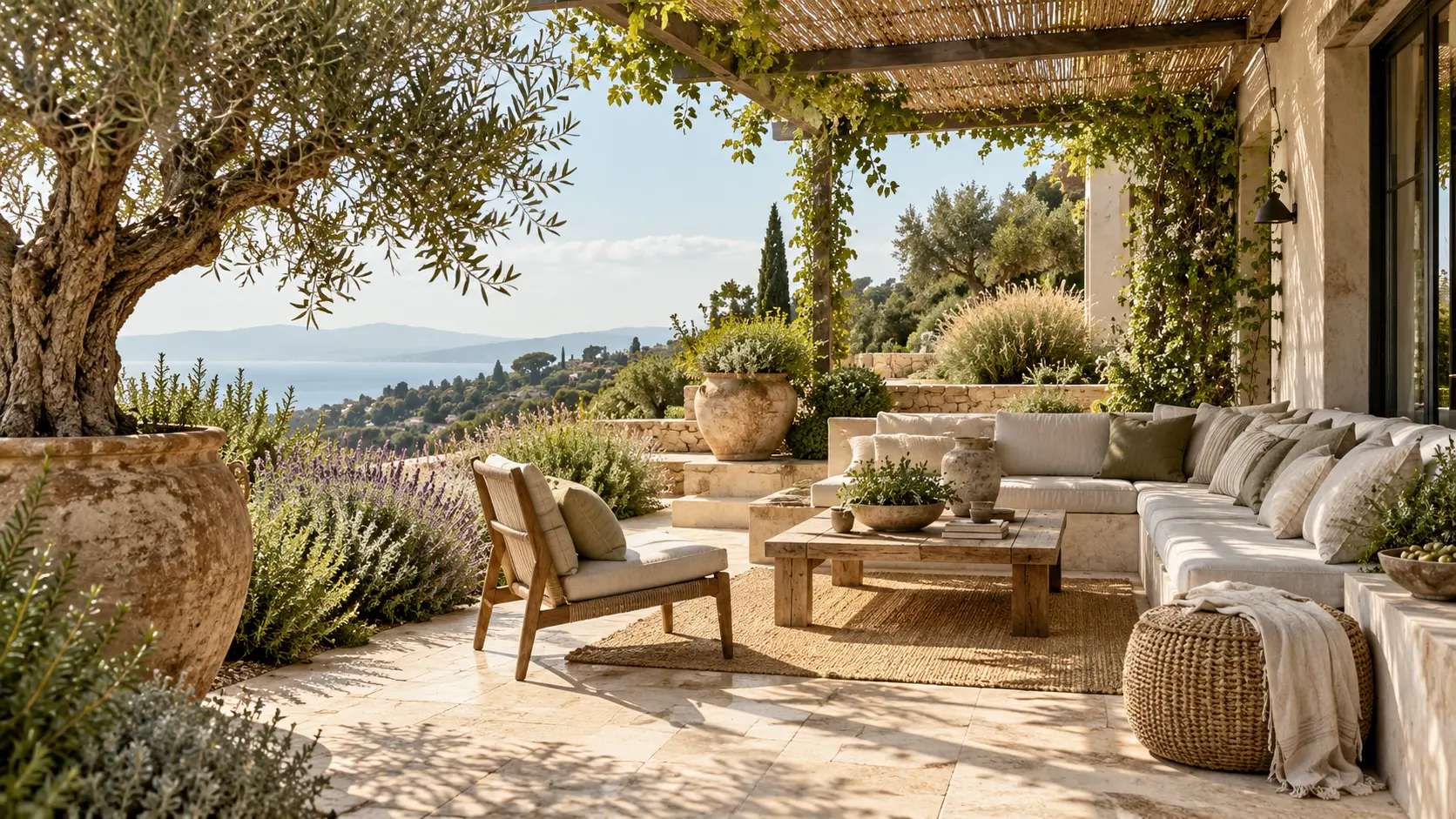
Some gardens are looked at; others make us stay. In the second kind, no single plant does all the work. What holds us is an almost invisible sequence: lavender brushed on arrival, warm stone underfoot, a leaf moving in the breeze, shade reaching the seat just as the afternoon slows. Designing a sensory garden means giving form to these perceptions without turning them into artificial scenery.
Design experiences before choosing plants
A sensory garden does not begin with a list of scented species. Start with moments: morning arrival, a shaded pause, lunch, play and the evening return. For each, observe sun, wind, outside noise, views and movement. The sequence decides where a plant should come close, where quiet matters and where a surface can change beneath the foot. The design works when it supports real gestures without constantly demanding attention.
Shade makes time visible
A pergola, canopy or light screen does more than cool the air. Moving shadows give surfaces depth and reveal the hours passing. Study orientation, height, density and season: a cover that is too closed may darken the house in winter, while an open weave may fail in summer. Test the main seat during the times it will be used, preserving airflow and a luminous relationship with the interior.
Scent needs distance and season
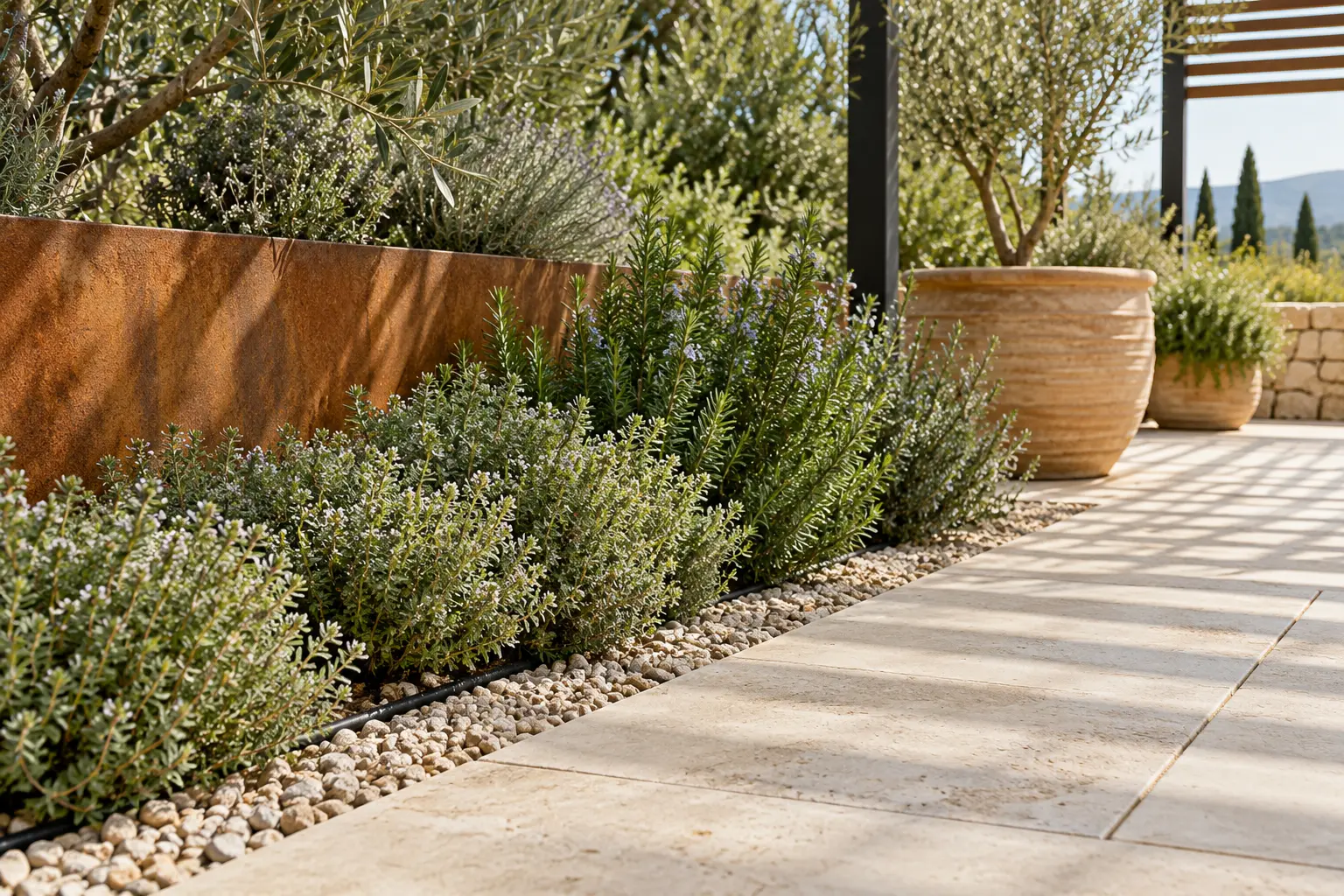
Rosemary, lavender, myrtle, thyme, jasmine and citrus can shape an olfactory landscape, but they should not all compete in one spot. Alternate intensity with neutral pauses and place herbs where they are brushed without invading circulation. Consider flowering periods, wind, irrigation, allergies, toxicity and insects. The final palette must suit microclimate and mature size: fragrance remains pleasurable when plants are healthy and do not require constant correction.
Sound: protect before adding
Listen to the existing place before introducing water or sound objects. Traffic, equipment and hard-wall reverberation may overwhelm a small rill. Layered planting, less reflective surfaces and permeable screens can soften the background without promising impossible acoustic isolation. Water can mark a quiet point when circulation, pump noise, safety and cleaning are resolved. Wind moving through leaves and grasses is also a design material.
Tactile character, safe routes
Bark, leaves, stone, terracotta and timber bring tactile depth, yet routes must remain stable. Check level changes, grip, joints, drainage falls, edges and accessibility. Gravel can sound pleasant and drain well, but near doors it needs containment and may be difficult for wheels or uncertain steps. A material change helps when it marks a threshold; it becomes noise when it fragments the space without purpose.
Invisible water supports every sensation
Scent, coolness and healthy planting depend first on soil, drainage and irrigation. Levels must carry water away from the house and prevent traps; pots and beds need suitable growing media and outlets. Divide irrigation into compatible zones and keep filters accessible. Appropriate mulch reduces evaporation and weeds. A credible sensory garden does not waste water to preserve an impossible image.
Evening also needs darkness
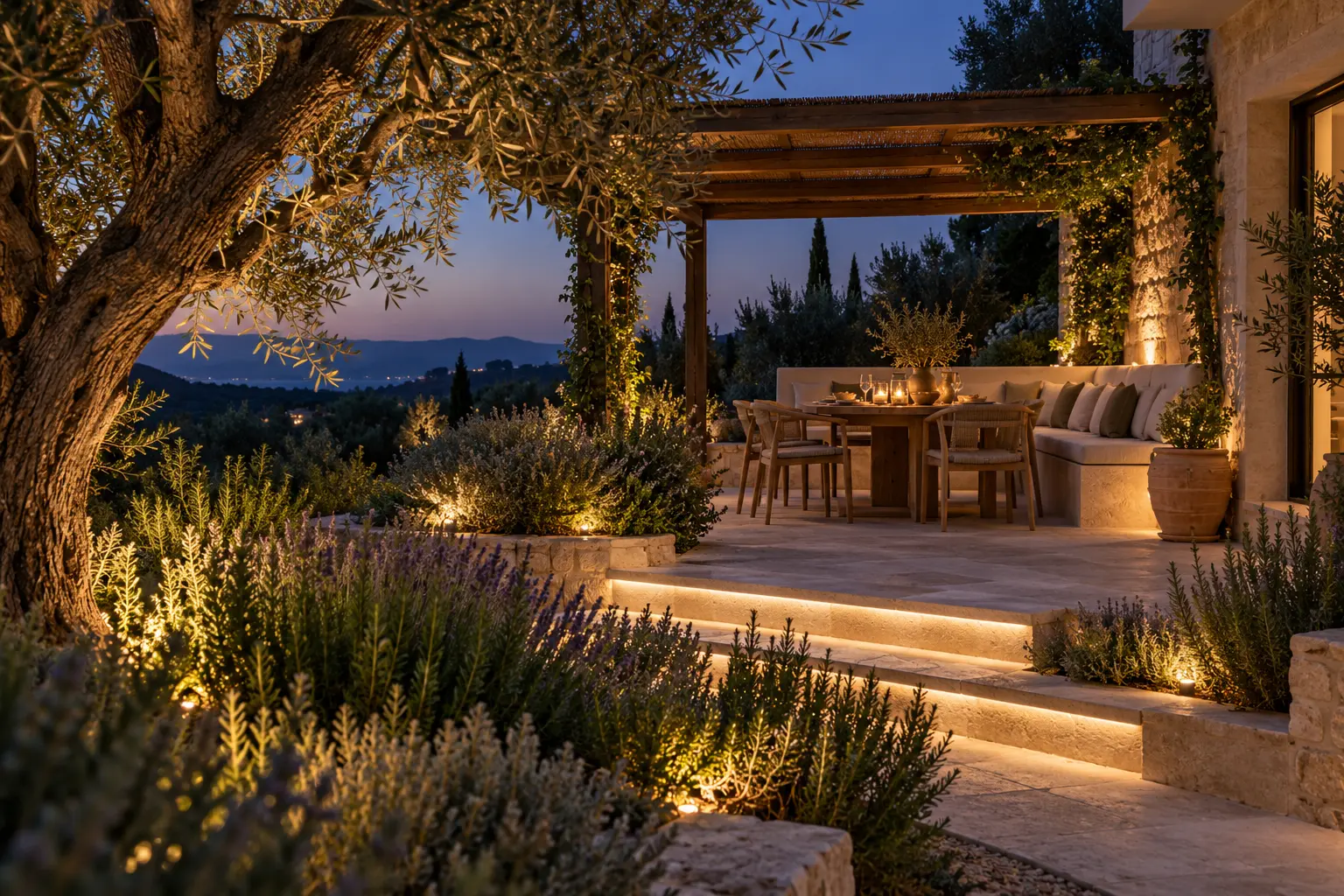
Night lighting guides movement, reveals texture and welcomes people to a seat; it should not illuminate every leaf. Use warm shielded sources and test beams and reflections on site. Steps and level changes need clarity, while a canopy may emerge through a few restrained accents. Avoid glare toward people, neighbours and sky. Exterior fittings and connections require competent design. Darkness gives the scene depth and calm.
A balcony can be sensory too
A comfortable seat, adjustable shade, three or four planting groups and a clear route are enough. Containers must suit roots, wind, load and drainage rather than act as decoration alone. One scented plant by the door, leaves moving in air and a portable lamp can change the experience more than many accessories. Check exposure, structural load and applicable building rules before buying.
Maintenance belongs to beauty
A garden grows, sheds leaves and changes density. Design access for pruning and services, space plants for mature size and choose a schedule that fits the time available. Keep irrigation, cable and plant records. During the first months, observe where soil dries first and how shade moves, then adjust carefully. A sensory garden is not complete on handover day; it gains depth as materials and planting age well together.
Useful tools and accessories
Guide to Mediterranean aromatic plants
Useful for comparing mature size, exposure and seasonality before composing a planting palette suited to the place.
View on Amazon.itAdjustable drip-irrigation kit
Delivers water near roots and can separate pots from beds; flow and timing still need calibration for the actual design.
View on Amazon.it2700 K portable outdoor lamp
Lets you test warm light beside a seat before planning fixed fittings and electrical routes.
View on Amazon.itSoil-moisture meter
May reveal differences between areas and containers without replacing observation of plants and growing medium.
View on Amazon.itAdvertising · Some links are Amazon affiliate links. Selection remains editorial and independent.
Explore the project
Contemporary Mediterranean garden · Light a garden path without glare · A wind-exposed balcony · The terrace as an open room · Design quote
Image note: original editorial visuals generated for White Diamond to express atmosphere, material and light in the sensory design.