
A contemporary Mediterranean garden: shade, water and breathing materials
A Mediterranean garden does not imitate a postcard: it builds coolness, scent and time around everyday gestures.
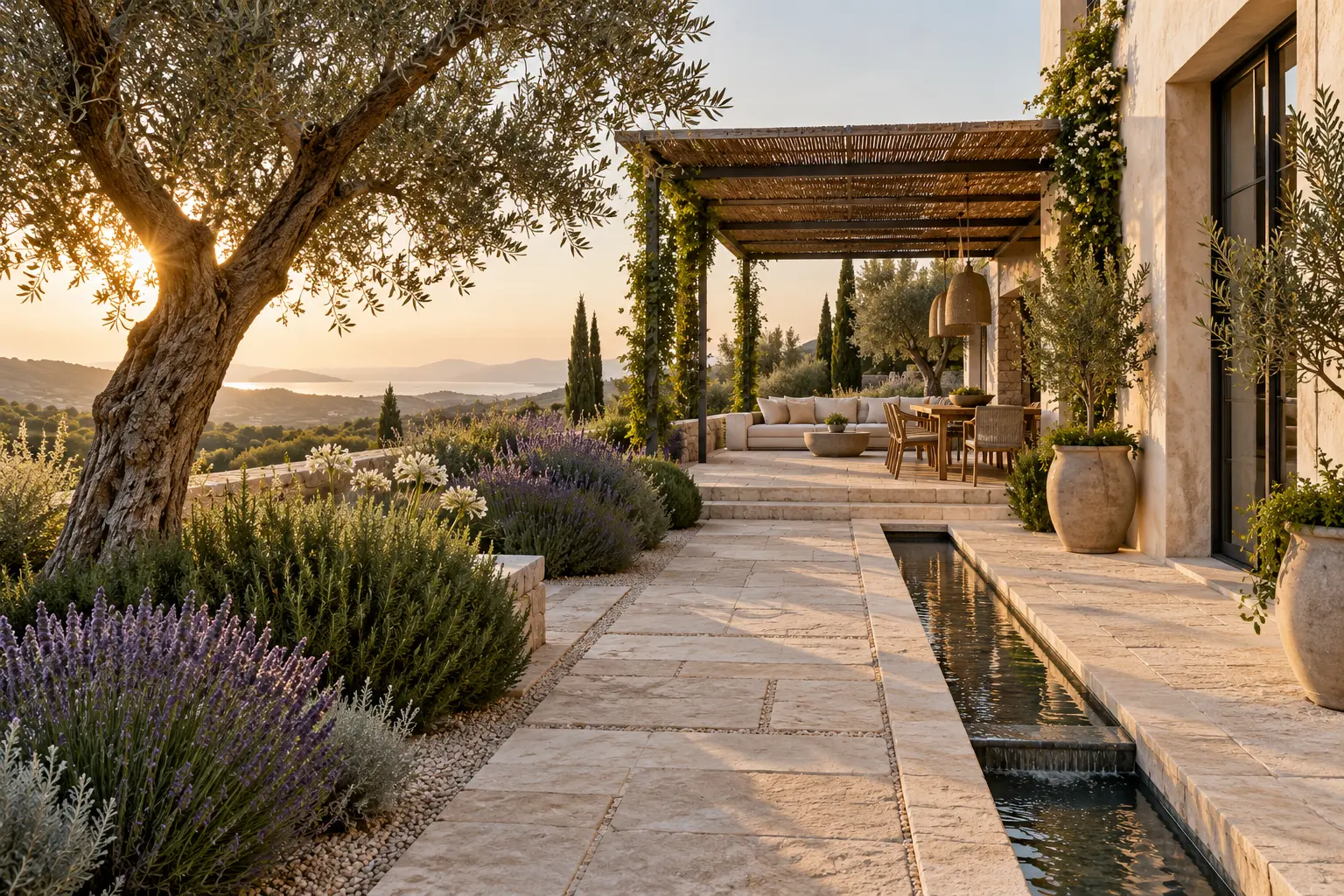
The sound of gravel underfoot, the moving shade of an olive tree and the scent released when rosemary is brushed can turn a modest outdoor space into a living room. A contemporary Mediterranean garden grows from this apparent simplicity, yet depends on precise decisions: where to stop the sun, how to guide water, which surfaces should breathe and which plants can genuinely belong to the place.
Listen to the place before drawing
Begin with hours of sun, prevailing wind, slopes, views and the residents’ habits. A bright spring corner may be unbearable in August, while a protected area may retain winter moisture. Photograph morning, midday and evening conditions and mark shade, standing water and spontaneous routes. Existing features matter: a mature tree, stone wall or distant view may be worth more than many additions. Mediterranean character is not a style applied afterwards; it grows from a specific response to climate, soil and everyday life.
Design outdoor rooms first
Dining, rest, play, movement and plant care need different spaces. Connect them through a clear hierarchy without covering every metre with paving and furniture. Dining should relate to kitchen and shade; a quiet seat can seek a view away from the main route. Full-size outlines of tables and occupied chairs reveal clearances better than an abstract plan. Once uses are ordered, planting stops being filler: it builds thresholds, protects privacy and gives the composition room to breathe.
Shade is the true architecture of comfort
Pergolas, trees and fabric shades are not accessories to add at the end. Shade moves through the day and must be studied for the hours of actual use. A dense pergola may darken the house in winter; a delicate cover may fail in the hottest weeks. Assess orientation, height, ventilation, deciduous or evergreen foliage and maintenance. The aim is not to erase sunlight but to modulate it. A moving pattern across stone makes time visible and creates coolness without turning the garden into a closed room.
Use fewer species as generous masses
A coherent garden does not need an endless collection. Choose a structure of plants suited to exposure and soil, then repeat groups with varied height and density. Rosemary, lavender, mastic, myrtle, germander, mock privet and grasses may provide texture, but final selection must consider microclimate, local availability, allergies, toxicity and mature size. An olive tree is not a photographic icon: it has roots, canopy and real needs. When species or conditions demand it, verify the planting palette with a qualified landscape professional.
Stone, gravel and timber must age well
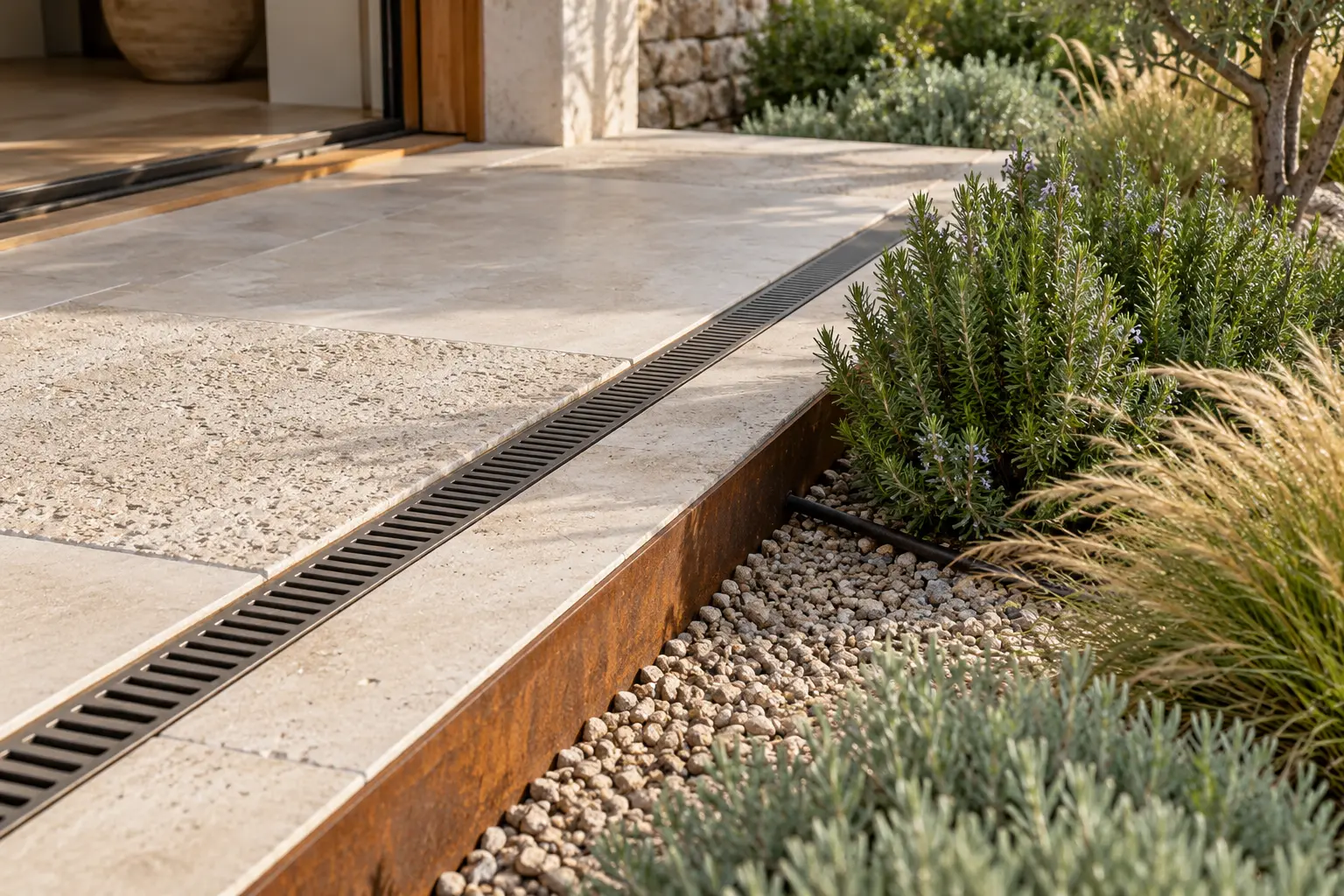
Outdoor materials are wetted, heated, stained and crossed every day. Select stone for use, finish, freeze exposure and slip risk, not colour alone. Gravel can drain and soften a path but needs containment and the correct build-up; near doors it may travel inside. Timber must suit exterior use and be detailed to dry. Limit the main materials and draw transitions with clear joints. A resolved edge creates more quality than an expensive surface stopped carelessly.
Guide water before displaying it
Rills and reflecting pools bring sound and light, but the first water design is invisible: falls, drains, overflows and movement away from the house. Finished levels must coordinate thresholds, paving and soil without traps. A linear drain may become part of the composition if it is accessible and correctly sized. Decorative water also needs circulation, cleaning, safety and responsible consumption. Before appearance, verify local requirements, services, maintenance and performance during intense rain.
Using less water still requires precision
Climate-suited plants may need less water after establishment, but early care remains exacting. Divide irrigation into compatible zones, deliver water near roots and check flow, pressure and duration. Trees, herbs and containers should not automatically share one cycle. Suitable mineral or organic mulch can reduce evaporation and weeds. Observe leaves and soil rather than trusting a fixed calendar. Leaks, blocked emitters and poorly calibrated sensors can waste water precisely when the garden appears self-sufficient.
Evening light should guide, never glare
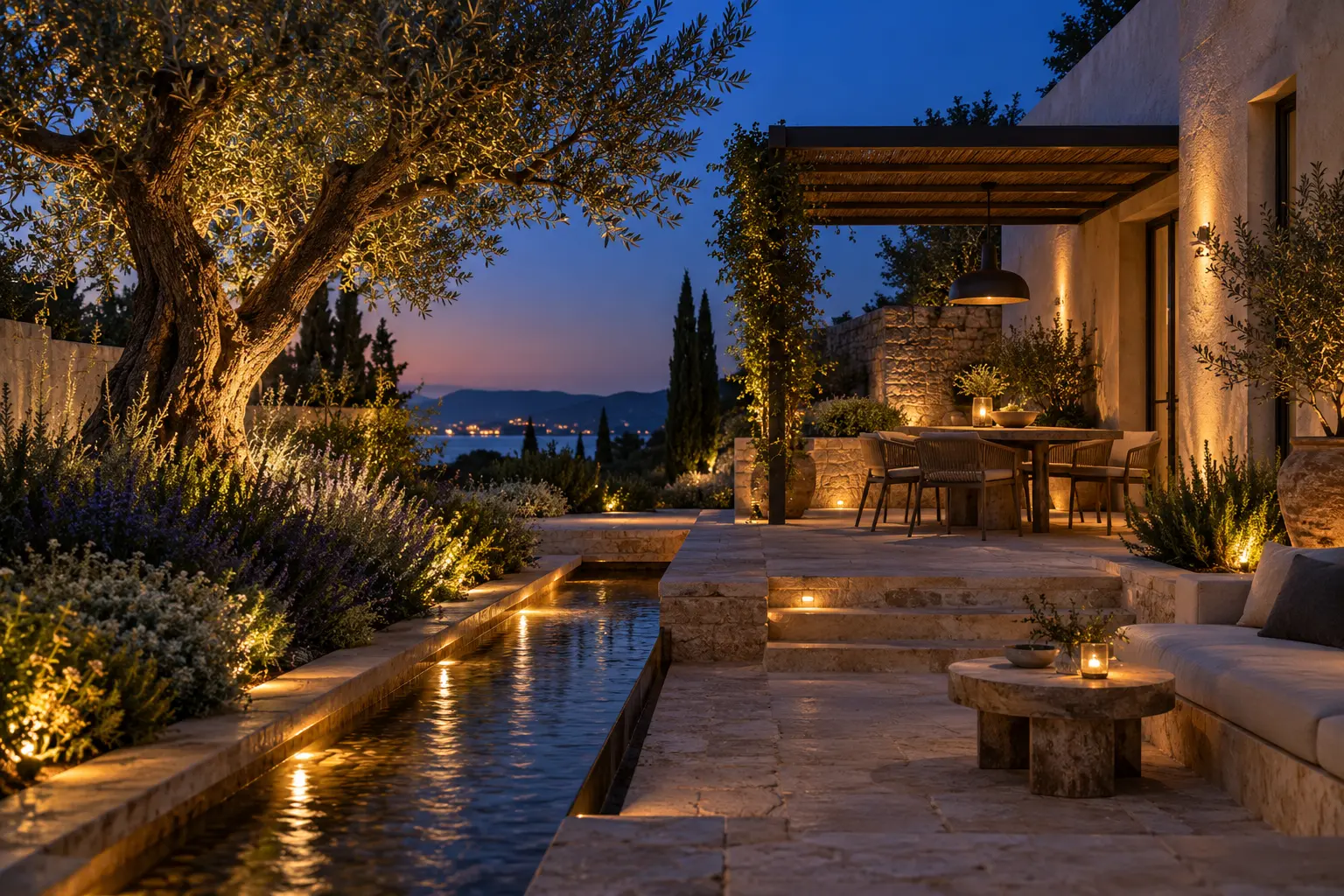
A route does not need a row of visible fittings. Shielded points can reveal steps and level changes; grazing light can describe a wall; a restrained accent can return depth to a canopy. Avoid beams aimed at eyes, neighbours or sky. Warm light keeps stone and foliage natural, while optics and positions should be tested on site. Equipment, power and joints must suit exterior conditions and be designed by competent professionals. A beautiful night garden keeps areas of darkness—it does not try to become daytime.
Wind changes furniture, textiles and scent
In exposed gardens, wind moves cushions, dries soil and destabilises umbrellas or light pots. Study air corridors and permeable protection, since a fully closed barrier may create turbulence. Furniture and structures must be stable, exterior-rated and placed outside circulation. Aromatic plants near a seat enrich the experience, but should not invade routes or attract insects to the wrong place. Comfort comes from sight, touch, sound and scent working together without becoming stage scenery.
A garden is a project through time
The opening-day photograph is not the final result. Plant spacing, growth, pruning, fallen leaves and replacement all belong to the design. Prepare maintenance that matches the available time: fewer species, clear service access and simple edges can improve the garden over years. Keep records of irrigation, cables, drainage and plant names. Before construction, renders and material mock-ups help test proportion and mood; seasonal observation confirms whether the landscape truly works for those who live there.
Useful tools and accessories
Book on Mediterranean gardens
A visual reference for studying planting masses, shade and the relationship between architecture and landscape before choosing individual species.
View on Amazon.itDrip-irrigation kit
Useful for delivering water close to roots; flow, zones and pressure must be sized for the actual garden.
View on Amazon.itSoil-moisture meter
May help reveal differences between areas, but it does not replace observing soil and plants.
View on Amazon.itWarm portable outdoor lamp
Lets you test a point of light near the seating area before installing a permanent circuit.
View on Amazon.itAdvertising · Some links are Amazon affiliate links. Selection remains editorial and independent.
Explore the project
A veranda for every season · The terrace as an open room · Light a garden path without glare · Contemporary Mediterranean style · Design quote
Image note: original editorial visuals generated for White Diamond to show the design atmosphere, details and lighting.