
A sofa in the middle of the room: circulation, rug and power without obstacles
Moving the sofa away from the wall can make a living room feel more fluid and assured, provided the empty space around it is designed as carefully as the furniture.
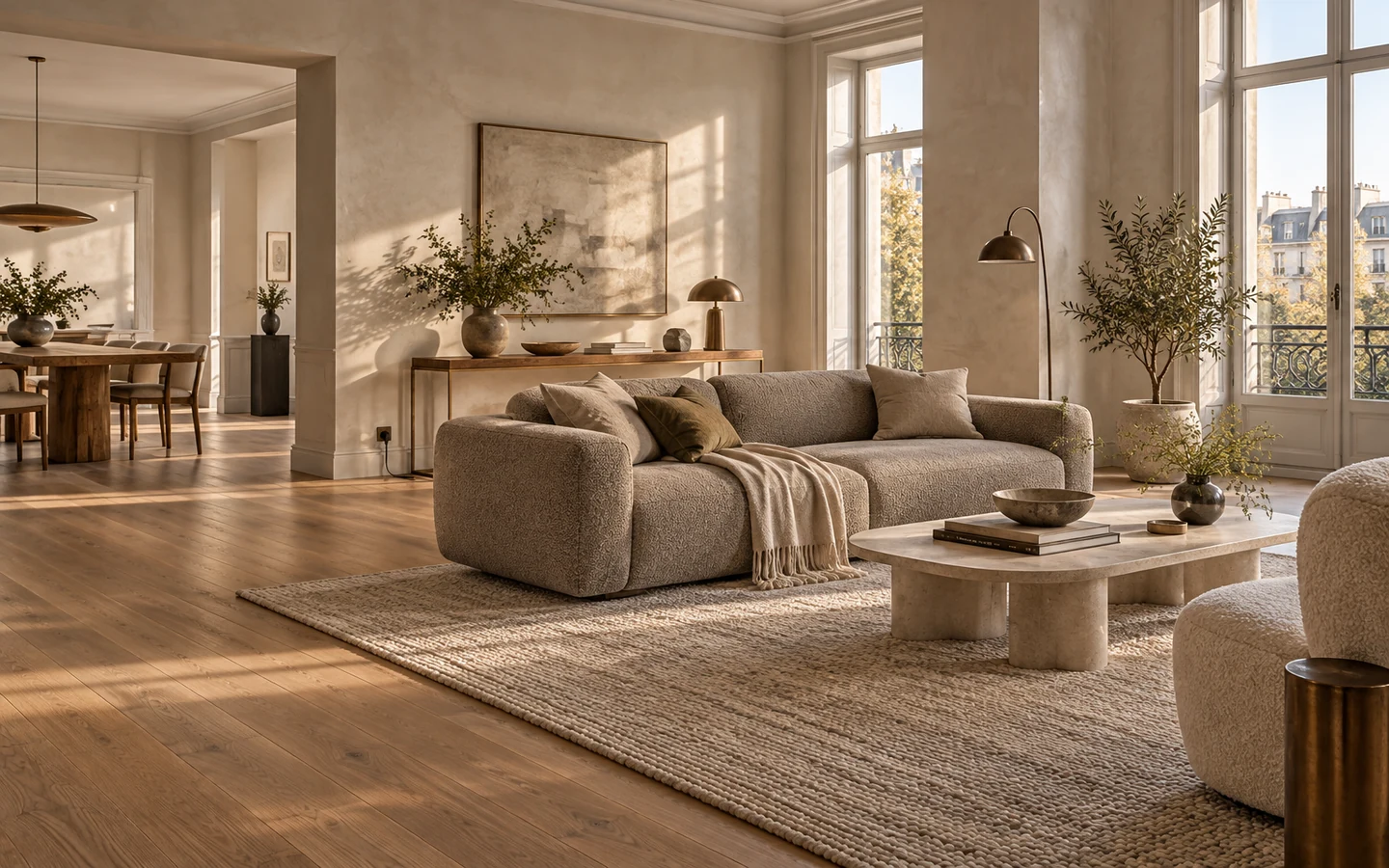
Putting the sofa against a wall often feels like the safe choice. Yet in long living rooms, open-plan homes and multi-purpose spaces, it can enlarge the empty centre without improving circulation. A freestanding sofa can define conversation, separate dining from relaxing and bring seats closer to daylight. The risk is an awkward island with an unresolved back, an undersized rug and visible cables. The answer is not to measure the sofa alone, but to design the room as a sequence of routes, stopping points and views.
First ask what the sofa should separate
A central sofa is not a decorative gesture but a device that directs space. It may divide living and dining, protect conversation from the entrance or create a front toward a fireplace and windows. Map the functions before the furniture: entrance, doors, table, television, balcony and storage. Then trace the routes you genuinely use. If the sofa blocks the shortest daily line between two points, people will constantly detour around it; if it runs beside that line, it becomes a natural boundary. In a small room, even a modest gap from the wall can create a more composed effect without sacrificing useful area.
Measure circulation with the body, not only on plan
As an initial test, a main route around 80–90 centimetres often feels more comfortable than a minimal strip, but it is not a universal rule: doors, people, mobility aids and habits may need more. Secondary gaps can be tighter when they are not through-routes. Mark the sofa, arms and console on the floor with low-tack tape, including the reach of cushions and side tables. Walk through carrying a tray, open nearby doors and simulate two people crossing. This reveals corners that look harmless in a drawing but become repeated collisions in daily life.
Let the coffee-table gap follow the gesture
Do not centre the coffee table for symmetry alone. It should accept a glass without an exaggerated reach and leave room for feet when sitting down. A starting gap of roughly 35–45 centimetres from the seat edge can be useful, then test it against sofa depth and the users’ stature. If circulation must pass in front, choose a lighter table, two movable pieces or an ottoman with a tray. Avoid crushing sofa, table and media wall together merely to create an oversized corridor behind; the relaxing area will lose comfort and proportion.
The rug should connect, not float
With a freestanding sofa, the rug is the visual ground of the composition. A small format isolates every object; a suitable one receives at least the front feet of sofa and armchairs, or the whole group when space allows. Recreate its outline with paper or tape before ordering and view it from the entrance. The edge should not land accidentally in the main walking line or create a change of level exactly where people turn. Consider thickness and stability, especially with heavy tables or a robot vacuum. A colour close to the floor can expand the setting; controlled contrast can define conversation more clearly.
Treat the back as a real elevation
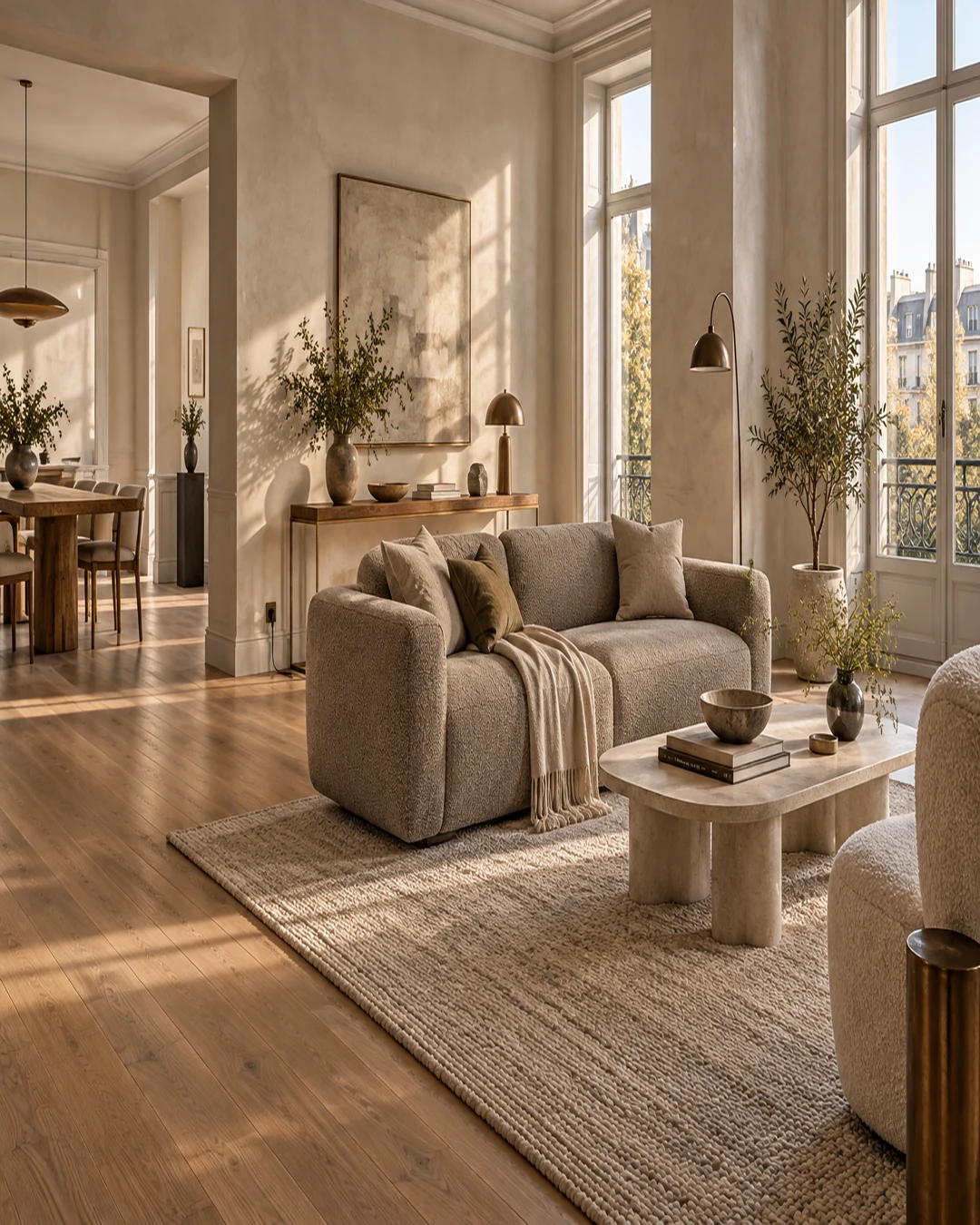
Once the sofa moves to the centre, its back matters as much as its front. Check seams, feet, zips and rear upholstery before purchase. A slim console can add a surface, light and order, but it is not compulsory: when it narrows circulation, a well-finished back is more elegant than extra furniture. A console should relate to the back height rather than rising above it accidentally. Books, a shielded lamp and a few objects are enough; fragile ornaments in a route create anxiety. If the dining table is behind, repeating one material or tone gives continuity between the zones.
Decide power before laying the rug
Reading lights, a console lamp and laptop charging all need power. Loose extension leads across the floor are inconvenient and unsafe. During renovation, discuss an accessible floor outlet with a qualified professional and locate it from the actual furniture plan rather than the room centre. In a finished home, use routes along walls and furniture, suitable surface trunking or rechargeable solutions; never conceal unsuitable cables beneath a rug. Keep plugs and transformers accessible. Electrical work should always be designed, installed and checked by a qualified professional.
Lighting: create an island without closing it
A central sofa benefits from layers: soft ambient light, a reading light near one seat and an accent on art or a wall. Keep floor lamps out of the point where a route changes direction, and make sure the shade does not glare when seated. A console lamp can identify the rear edge, but it needs stability and shielding. Test the scenes separately after dark: conversation should feel gathered while surrounding routes remain legible. Separate controls make it possible to move from reading to entertaining without flattening the whole open-plan room.
Common mistakes and the final test
Frequent mistakes include choosing excessive sofa depth, forgetting door swings, using a small rug, adding a console merely to fill space and leaving power far away. Another is aligning the sofa to the room rather than the primary view: a slight angle or controlled shift can improve its relationship with window, fireplace and table. Before ordering, build a full-size volume with boxes and blankets and live around it for a day. Sit, cross the room, open everything and look from each entrance. The right layout should work even when nobody is admiring it.
Budget and decision order
Invest first in the plan and correct size, then in sofa quality. Include the rug, tables, console, lighting, power and any electrical work in the budget: these are what make a central position convincing. Confirm that the sofa can pass through doors, stairs and lifts, and request specifications for modules, depth and rear finish. Establish circulation and focal point first, then sofa dimensions, rug and surfaces, and accessories last. A quieter model chosen for the real room can feel more elegant than a dramatic sofa forced into a plan that cannot support it.
Technical references
Institutional websites and industry documentation consulted on 7 October 2026.
Design the space around the sofa
White Diamond can test the layout against your real measurements, coordinating sofa, rug, tables, power, lighting and circulation. Plans and personalised renders let you compare configurations before buying, understand what happens behind the backrest and choose dimensions that remain comfortable in everyday life.
Request your personalised quote