Planting a shady border where the rain only reaches halfway
Barrenwort foliage sits low against the wall. Deep red astilbe plumes rise by the path. In a border just a metre and a half deep, a shower can help you decide where each group belongs.
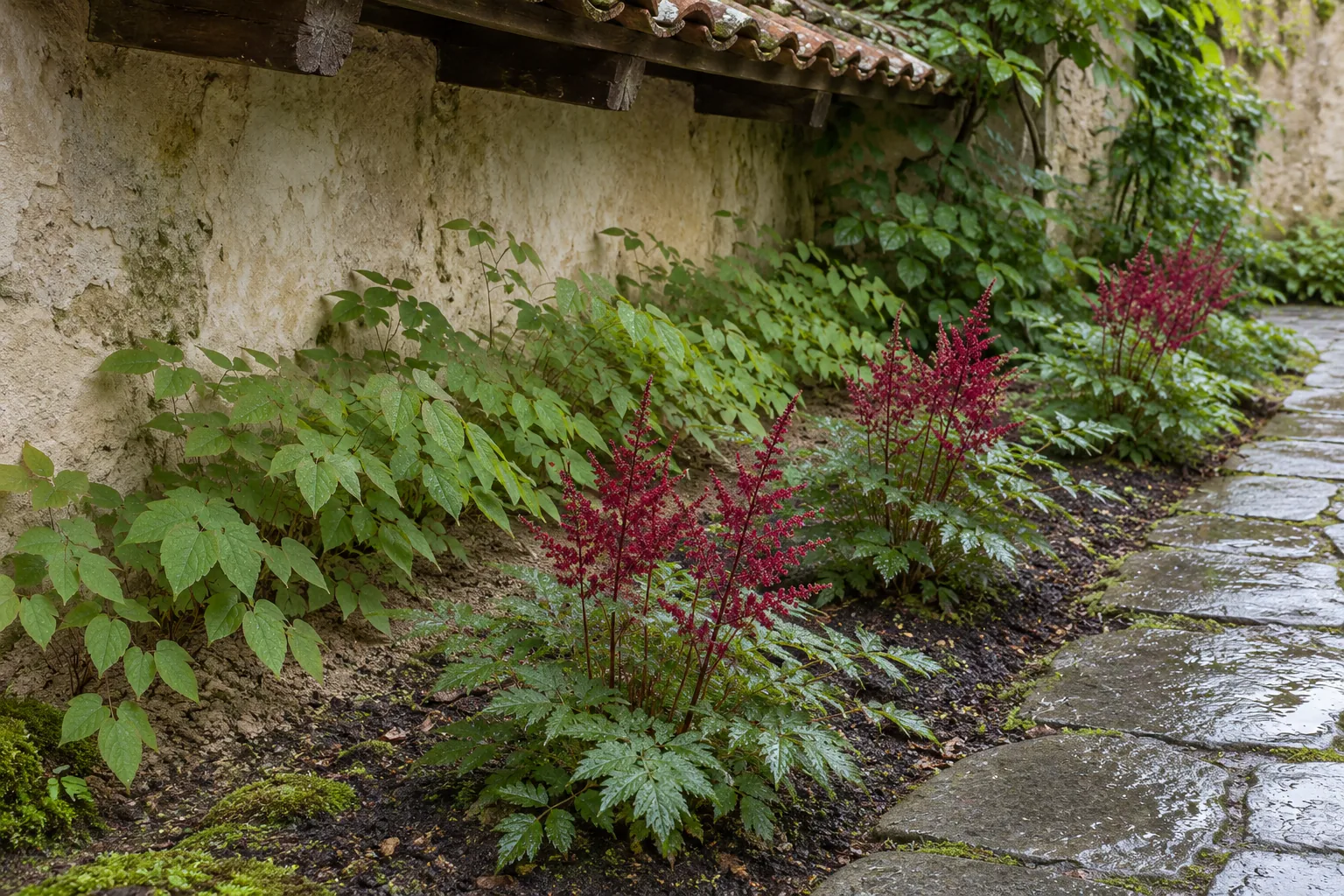
The rain has stopped. The flagstones are still dark and drops cling to the foliage beside the path. Draw back the mulch by the wall. If the soil underneath crumbles dry, two plants sold for shade could fare quite differently within a single stride of each other.
How far does the rain reach?
A wall can shelter a strip of ground from wind-driven rain. The Royal Horticultural Society notes that this rain shadow can extend about a metre from a wall. Overhanging eaves can change the pattern again. Before you order plants, find out where the water lands in your own garden.
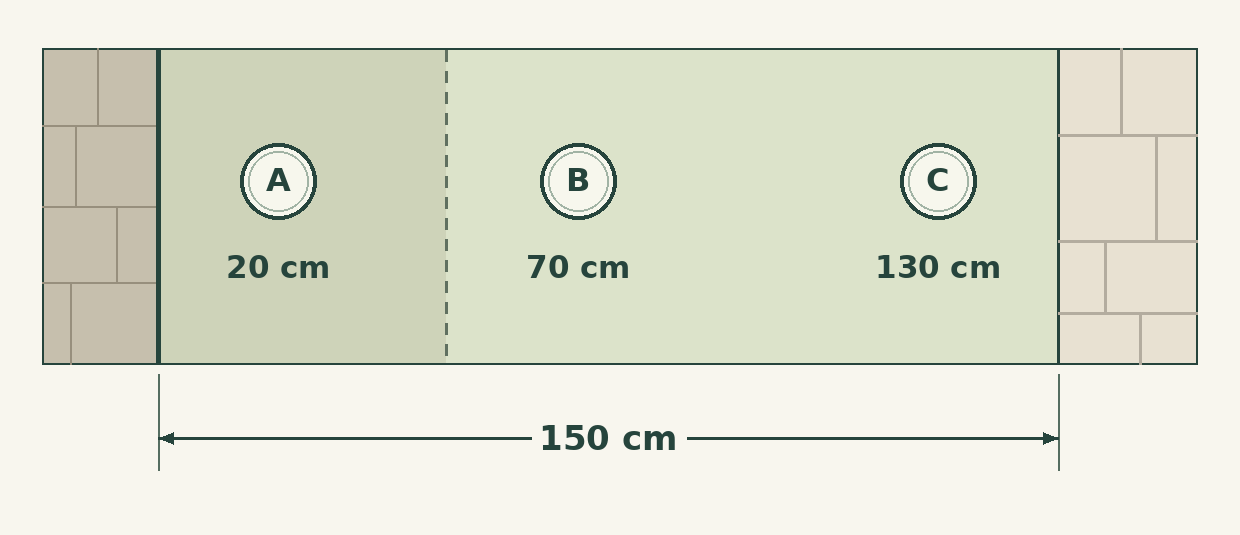
Take a border 150 cm deep from wall to path. Before a shower, set three identical, empty, straight-sided containers on level ground, 20, 70 and 130 cm out from the wall. Keep the openings clear of leaves and away from gutter outlets. Compare the levels when the shower ends, then empty the containers and bring them in. Try again when the wind comes from a different direction.
Match each plant to the soil
The containers tell you about one shower. What matters to a plant is how much moisture the soil holds around its roots. Dig down to the depth of the rootball you intend to plant. Check the soil again after a few dry days and during a spell of hot weather.
Suppose the first spot stays dry almost all the time, the middle gets some rain and the outer edge holds moisture even in summer. I’d plant Epimedium × versicolor ‘Sulphureum’ in the middle. Its yellow spring flowers give way to a layer of heart-shaped foliage about 25–30 cm high. It tolerates dry conditions once established. Keep it watered through its first season.
The outside edge could take Astilbe ‘Fanal’. In dappled shade and moisture-retentive soil it carries deep red plumes on stems up to 60 cm high in early summer. Set the clumps in small groups, leaving gaps. From the path you’ll still see the low carpet of leaves against the wall.
Where to leave a gap
If the soil beneath the eaves stays dusty and you can’t reach it with a hose, leave that strip open and start the planting further out. If the outer edge also dries out in summer, cross the astilbe off the list. Take a sketch of the border to the nursery with all three spots marked. It tells the grower more than the word ‘shade’ alone.