A cardboard template to check whether chair arms fit under your dining table
The arm clears the edge of the top, then the chair stops. A full-size side profile shows how far the back will stick out once dinner is over.
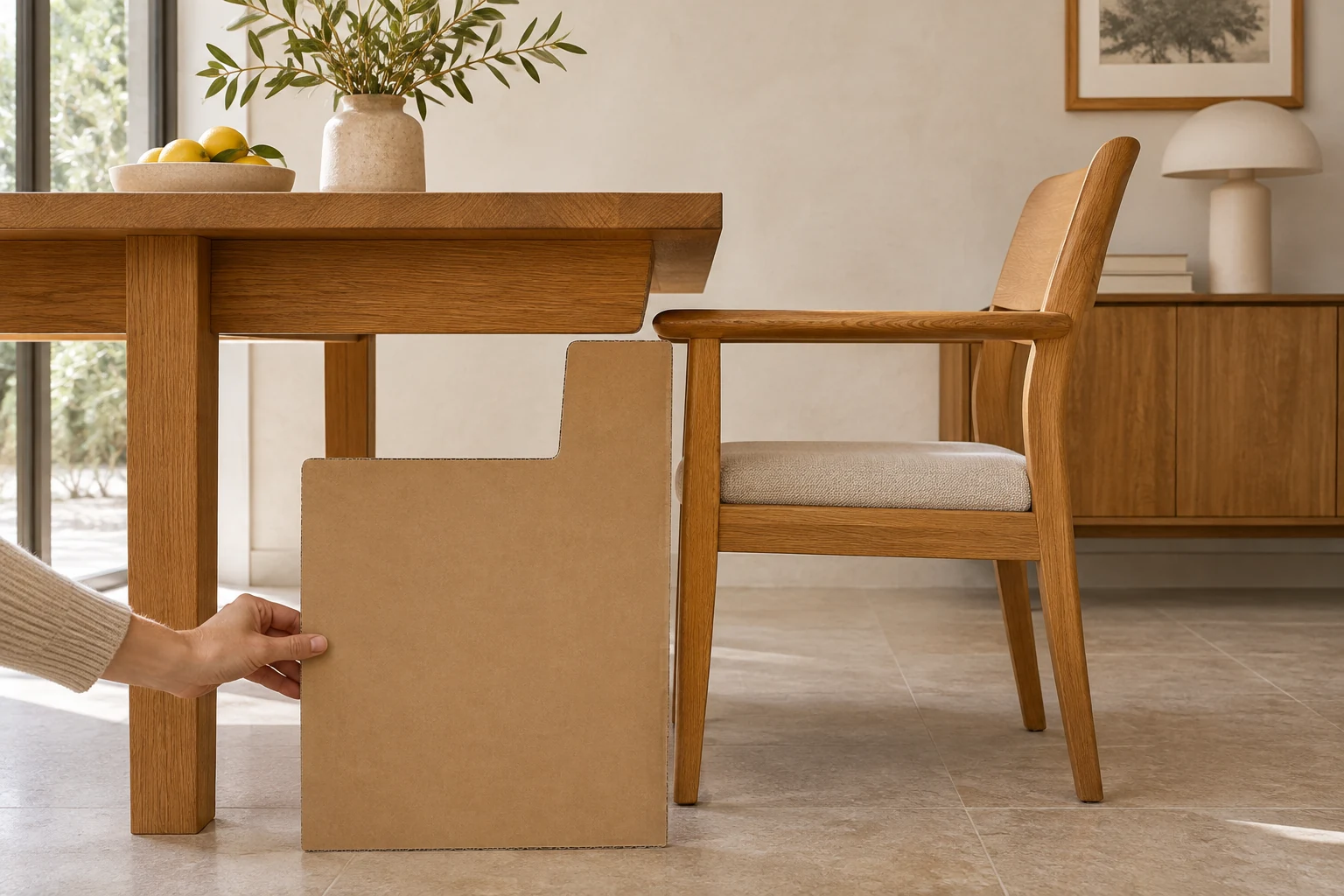
After dinner, the chairs go back under the table to clear the route to the kitchen. If one stops short, its back can end up exactly where you walk with a stack of plates. When you want to keep the table and change the chairs, you can find that stopping point before you order. You need a side view of the chair, a tape measure and a piece of stiff cardboard.
Find the first obstruction under the top
Look at the table from the side and move your hand along the path the front tip of the arm will take. A slim tabletop may overhang a deeper wooden rail, known as the apron. An extending table may also have a runner underneath. At the place where the chair will sit, measure from the floor to each obstruction’s lower edge. Note how far each one is set back from the outer edge of the top.
Read the two drawings together
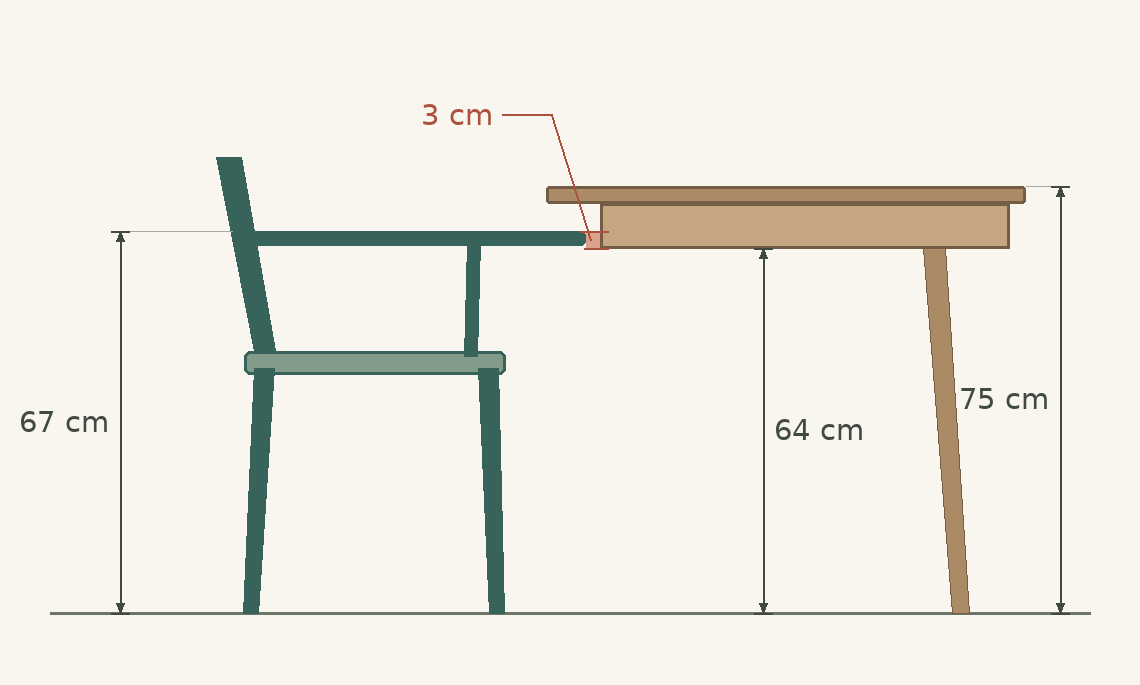
Thonet gives an arm height of 67 cm and an overall width of 58 cm for its S 64 V NORDIC 04 chair. In its Navis dining table drawing, PBJ Designhouse gives a height of 75 cm to the top and 64 cm to the underside of the frame.
Subtract the 67 cm arm height from the overall table height and there appears to be 8 cm to spare. Where the arm meets the frame, the available height is only 64 cm. The arm is 3 cm too high to pass. Those dimensions explain where a collision could occur. To find out how far the back will stick out, you also need to know how far under the top the arm can travel first.
Cut out the profile and slide it into place
Draw a floor line on the cardboard. Mark the front tip and upper edge of the arm at full size, then add a vertical line through the furthest point of the chair back. If you are working from a printout, use a tape measure to check one horizontal and one vertical dimension. If the catalogue only lists maximum dimensions, ask for a side drawing or take the measurements in the showroom.
Cut along the upper outline. Stand the cardboard upright with its base on the floor. Slide it towards the table along the path of the left arm, then repeat on the right. Stop at the first touch, keeping the cardboard straight. Mark the position of the chair back on the floor with a little tape. Walk past carrying a tray.
Once the profile fits
Check the distance between the table legs at the depth the chair has reached. Splayed legs may leave a different opening at arm height than at floor level. If the chair back takes up too much of the route to the kitchen, try the template at the end of the table. If it tucks in there, keep the armchairs at the ends and use armless chairs along the busy side. For a final check on comfort, sit at the table in the actual chair.